Is Your Electrical Panel Up to Code? Signs It Needs an Upgrade
Learn if your electrical panel meets current code, signs it needs upgrading, Federal Pacific dangers, upgrade costs in BC, and insurance implications.
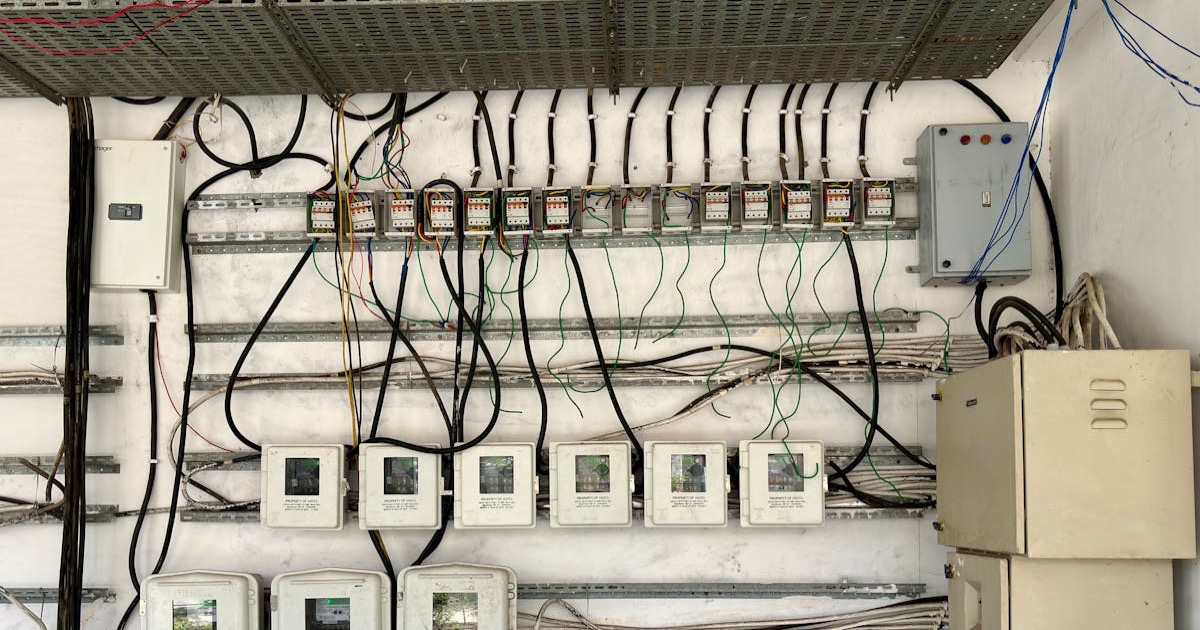
There is a metal box on the wall of your basement, garage, or utility room that you probably walk past every day without thinking about it. That box - your electrical panel - is the single most important safety device in your home. Every watt of power flowing through your wiring passes through it. Every circuit breaker inside it stands between your family and an electrical fire.
And if your panel is outdated, undersized, or one of several known-hazardous brands, it could fail to protect you when it matters most.
This post is going to walk you through everything you need to know about your electrical panel: how to tell if it meets current code, the specific panel brands that are documented fire hazards, what modern code requires, how much an upgrade costs in BC, and why your insurance company might care more about your panel than you do.
What Your Electrical Panel Does (And Why It Matters)
Before we get into what can go wrong, let us understand what your electrical panel is supposed to do.
Your electrical panel receives power from the utility (BC Hydro in the Okanagan) through your service entrance cables. That power enters the main breaker, which controls the total electrical supply to your home. From there, power is distributed through individual circuit breakers to every circuit in your house - your kitchen, bedrooms, bathrooms, outdoor outlets, HVAC system, and everything else.
Each circuit breaker has one job: if the circuit it protects draws more current than the wiring can safely carry, the breaker trips and cuts power to that circuit before the wires overheat. It is a simple, elegant system. When it works.
The problem is that breakers are mechanical devices. They wear out. They corrode. They can fail to trip when they should. And some brands of breakers have been shown to have catastrophically high failure rates.
When a breaker fails to trip during an overload, nothing stops the wires from overheating. Overheated wires ignite the wood framing inside your walls. And you have a house fire.
Signs Your Electrical Panel Needs an Upgrade
Not every old panel needs to be replaced. But certain signs indicate that your panel is no longer safe, no longer adequate, or no longer code-compliant.
1. Your Panel Is a Known-Hazardous Brand
This is the most urgent reason to upgrade. If your panel is one of the following brands, replacement is strongly recommended regardless of its age or apparent condition.
Federal Pacific Electric (FPE) Stab-Lok Panels
Federal Pacific Electric panels with Stab-Lok breakers were installed in millions of homes across North America from the 1950s through the 1980s. Multiple independent studies and testing programs have found that FPE Stab-Lok breakers fail to trip at alarming rates.
Research conducted by engineers and testing laboratories has shown that certain FPE Stab-Lok breakers fail to trip under overload conditions in a significant percentage of tests - some studies finding failure rates of 25% to 60% or higher, depending on the breaker type and age. A breaker that fails to trip 25% of the time means that one in four overload events will not be interrupted. The wires will overheat, and nothing will stop them.
The Consumer Product Safety Commission (CPSC) investigated Federal Pacific in the 1980s but never issued a formal recall. However, multiple class-action lawsuits have been filed, and the overwhelming consensus among electrical safety professionals is that FPE Stab-Lok panels should be replaced.
How to identify an FPE panel: Look for "Federal Pacific Electric" or "FPE" on the panel door or label. Inside, Stab-Lok breakers have a distinctive design where the breakers slide into place rather than snapping onto a bus bar. The breakers often have orange, red, or black handles.
If your home has a Federal Pacific Electric Stab-Lok panel, do not rely on it to protect your home. The documented failure rates of these breakers make them one of the most significant residential electrical hazards. Contact a licensed electrician to discuss replacement, even if the panel appears to be functioning normally.
Zinsco (GTE-Sylvania) Panels
Zinsco panels were manufactured from the 1970s into the 1980s, often sold under the Sylvania or GTE-Sylvania brand names. These panels have a well-documented defect: the breakers can fuse to the bus bar due to overheating, making them impossible to trip manually or automatically.
When a Zinsco breaker fuses to the bus bar, it becomes permanently welded in the "on" position. The breaker cannot trip, even during a dead short. The only thing that will stop current flow is the main breaker - if it also has not fused.
How to identify a Zinsco panel: Look for "Zinsco," "Sylvania," or "GTE-Sylvania" on the panel label. Zinsco breakers are often color-coded (blue, red, green, yellow) and have a distinctive angled handle design.
Other Panels of Concern
- Pushmatic panels - use push-button breakers instead of toggle switches. While not as inherently dangerous as FPE or Zinsco, they have been out of production for decades, replacement breakers are scarce and expensive, and the panels lack modern safety features.
- Split-bus panels - have two separate bus sections and no single main breaker. The Canadian Electrical Code now requires a single main disconnecting means. Split-bus panels are not inherently dangerous but are considered outdated.
- Any panel where breakers are no longer available - if you cannot buy new breakers for your panel, you cannot properly maintain it. An unavailable breaker that needs replacement means the panel needs replacement.
2. You Still Have a Fuse Box
If your home still has a fuse box instead of a circuit breaker panel, it is time for an upgrade. Fuse boxes were common in homes built before the 1960s and work on the same principle as breakers - when a circuit draws too much current, the fuse blows and cuts power.
The problem is not that fuses do not work. The problem is how homeowners use them. When a fuse blows, it must be replaced. And over the decades, countless homeowners have replaced blown fuses with higher-amperage fuses or even pennies, eliminating the overcurrent protection entirely.
Beyond the misuse issue, fuse boxes typically provide only 60 amps of service - far less than what modern homes need. They also lack the convenience and safety features of modern breaker panels, including GFCI and AFCI protection.
3. Your Panel Is Undersized for Your Needs
Many Okanagan homes built before the 1990s have 100-amp electrical service. While 100 amps was adequate for the electrical demands of that era, modern homes with the following features often need 200-amp service:
- Central air conditioning
- Electric vehicle charger (Level 2 chargers typically need a 40-amp or 50-amp circuit)
- Electric range and oven
- Electric dryer
- Hot tub or pool equipment
- Home workshop with power tools
- Multiple home office setups
- Electric heating (baseboard or heat pump)
- Solar panel system with battery storage
If your breakers trip frequently, you cannot add the circuits you need, or your electrician has told you your panel is full, an upgrade to 200-amp service may be necessary.
Even if you do not currently need 200-amp service, upgrading when you do replace your panel is a smart investment. The incremental cost to go from 100 to 200 amps during a panel replacement is much less than doing a separate upgrade later. And with the trend toward electrification of vehicles and home heating, your power needs are only going to increase.
Electrical Safety Check
Starting at $175/visit - included in your plan
4. Your Panel Shows Physical Signs of Damage
Open your panel door (just the outer door - do not remove the inner cover, called the dead front). Look for:
- Rust or corrosion on the panel box or door
- Burn marks or discoloration on or around the panel
- A burning smell when you stand near the panel
- Buzzing or humming sounds coming from inside the panel
- Heat radiating from the panel - the metal box should be at room temperature
- Moisture or water staining inside or around the panel
- Missing knockouts (holes in the panel box where cables should enter through proper connectors)
Any of these signs warrants an inspection by a licensed electrician. Do not remove the dead front to look inside - the bus bars and service entrance connections behind it carry lethal voltage.
5. Your Panel Has Double-Tapped Breakers
Double-tapping means two wires are connected to a single breaker terminal designed for only one wire. This is a code violation and a fire hazard because the connection for two wires on a single-wire terminal is inherently insecure. One or both wires can loosen, creating resistance, heat, and the potential for arcing.
Double-tapping usually happens when a new circuit is added and there are no available spaces in the panel. Instead of upgrading the panel, someone connects the new wire to an existing breaker. This is a clear sign that your panel has outgrown your home's needs.
Some breakers are rated for two wires - they are specifically marked as such on the breaker body. But most standard breakers are not, and in practice, the vast majority of double-tapped breakers found during inspections are violations.
6. You Have No AFCI or GFCI Protection
The Canadian Electrical Code (CEC) has evolved significantly over the past two decades. Current code requires:
- AFCI protection on circuits serving bedrooms (required since the early 2000s, with expanded requirements in subsequent code cycles)
- GFCI protection on circuits serving bathrooms, kitchens (within a specified distance of the sink), garages, unfinished basements, outdoor outlets, and other wet locations
If your panel was installed before these requirements took effect, your home lacks these protections. While you are not required to retroactively upgrade to current code unless you are doing a renovation, adding AFCI and GFCI protection is one of the most impactful safety improvements you can make.
AFCI protection alone has been shown to significantly reduce the incidence of electrical fires caused by arc faults. Given that arc faults are one of the leading causes of residential electrical fires, this protection is genuinely life-saving.
What Current Electrical Code Requires
Understanding what the current Canadian Electrical Code (CEC) requires helps you evaluate how far behind your home's electrical system may be. While existing homes are generally grandfathered under the code that was in effect when they were built, any new work must meet current code. And understanding the current requirements gives you a benchmark for safety.
Service and Panel Requirements
- Single main disconnecting means - one main breaker that cuts all power to the panel
- Proper clearances - the panel must have 1 meter (approximately 3 feet) of clear space in front of it, with adequate headroom and lighting
- Correct breaker sizing - every breaker must be sized to match the wire gauge it protects
- Proper labeling - every circuit must be clearly labeled on the panel directory
- Secure connections - all wiring connections must be tight and properly terminated
- Appropriate panel rating - the panel must be rated for the home's service size
Circuit Protection Requirements
- AFCI protection on bedroom circuits (and expanding to other areas in newer code editions)
- GFCI protection on bathrooms, kitchens (countertop circuits), garages, outdoors, unfinished basements, crawlspaces, and laundry areas
- Tamper-resistant receptacles in all dwelling unit locations
- Weather-resistant receptacles for outdoor outlets
- Dedicated circuits for major appliances (refrigerator, dishwasher, microwave, laundry, furnace, etc.)
Grounding and Bonding
- Grounding electrode system - the electrical system must be grounded to an approved electrode (ground rod, concrete-encased electrode, or metal water pipe within specified distances)
- Equipment grounding - all circuits must include an equipment grounding conductor
- Bonding - metal water pipes, gas pipes, and other metallic systems must be bonded to the electrical grounding system
Electrical Safety Check
Starting at $175/visit - included in your plan
What Does an Electrical Panel Upgrade Cost in BC?
Let us talk real numbers. An electrical panel upgrade in British Columbia involves several potential components, and the total cost depends on the scope of work required.
Panel-Only Replacement
If your service entrance (the mast, meter base, and service cable from BC Hydro's connection point to your panel) is in good condition and already rated for 200 amps, you may only need the panel itself replaced.
Typical cost: $2,000 to $4,000
This includes:
- A new 200-amp panel with a main breaker
- New circuit breakers (standard, GFCI, and AFCI as required)
- Reconnecting all existing circuits to the new panel
- Proper labeling of all circuits
- Permit and inspection by Technical Safety BC (the provincial safety authority)
- Coordination with BC Hydro for temporary disconnect (if required)
Full Service Upgrade (Panel + Service Entrance)
If your service entrance is undersized (100-amp or less), damaged, or does not meet current code, the entire service needs upgrading.
Typical cost: $4,000 to $8,000+
This includes everything in a panel-only replacement plus:
- New service mast and weatherhead
- New meter base (200-amp rated)
- New service entrance cables
- BC Hydro disconnect and reconnect (BC Hydro typically does not charge for this, but scheduling can add time)
- Possible exterior work (new mast mounting, conduit, etc.)
- Updated grounding electrode system if required
Additional Costs to Consider
- AFCI breakers cost more than standard breakers ($30-$60 each vs. $5-$15 for standard). If you are adding AFCI protection to multiple circuits, budget an additional $200-$500.
- Subpanel installation - if you need more circuits than your new panel has spaces, a subpanel may be needed ($500-$1,500 additional).
- Aluminum wiring remediation - if your panel upgrade reveals aluminum wiring issues, proper remediation adds cost. COPALUM or AlumiConn connectors at every connection point can run $3,000-$5,000 or more depending on the number of connections.
- EV charger circuit - adding a dedicated 240-volt circuit for an electric vehicle charger during the panel upgrade saves money compared to doing it separately ($300-$800 additional).
When getting quotes for a panel upgrade, ask each electrician to itemize the quote so you can compare components directly. Also ask whether the quote includes the permit and inspection fees, BC Hydro coordination, and any necessary exterior work. A low quote that does not include these items is not actually a low quote.
Insurance Implications: Why Your Panel Affects Your Coverage
Your insurance company has a keen interest in your electrical panel. Electrical fires are among the most common and most costly residential insurance claims, and certain panels are known to dramatically increase fire risk.
Panels That Affect Insurance
Many insurance providers in British Columbia will take one or more of the following actions if your home has a Federal Pacific, Zinsco, or Sylvania panel:
- Refuse to issue a new policy until the panel is replaced
- Refuse to renew an existing policy and give you a deadline for replacement
- Charge significantly higher premiums - sometimes hundreds of dollars per year more
- Exclude electrical fire coverage from your policy, meaning if an electrical fire occurs, your claim is denied
The same restrictions may apply to homes with:
- Fuse boxes
- 60-amp service
- Active knob-and-tube wiring
- Aluminum wiring without documented remediation
The Cost-Benefit Calculation
Consider this: a panel upgrade costs $3,000 to $6,000 on average. A house fire caused by a failed panel can easily cause $50,000 to $300,000 in damage, not including the value of personal belongings, temporary living expenses, and the emotional toll. If your insurance denies the claim because of a known-hazardous panel, you bear the entire cost yourself.
Even without a fire, the annual insurance premium savings from upgrading a hazardous panel can be $200-$500 per year. Over the 25+ year life of a new panel, those savings alone can cover a significant portion of the upgrade cost.
What Insurance Companies Want to See
When you upgrade your panel, keep all documentation:
- The permit number issued by your local building authority
- The inspection report from Technical Safety BC
- The invoice from your licensed electrician
- Before and after photos of the panel
- The new panel's specifications and warranty information
Send copies of the inspection report and invoice to your insurance company. Many will adjust your premium downward upon receiving documentation of a panel upgrade.
Electrical Safety Check
Starting at $175/visit - included in your plan
The Upgrade Process: What to Expect
If you decide to upgrade your electrical panel, here is what the process typically looks like.
Step 1: Assessment and Quote
A licensed electrician visits your home, evaluates your existing panel and service entrance, discusses your current and future electrical needs, and provides a detailed quote. Get at least three quotes from different electricians. Ask each one about their experience with panel upgrades specifically - this is specialized work.
Step 2: Permit
Your electrician pulls a permit from your local building authority (the City of Kelowna, West Kelowna, Penticton, Vernon, or your regional district). A permit is legally required for all panel work in BC. Any electrician who suggests skipping the permit is not someone you want working on your panel.
Step 3: BC Hydro Coordination
If your service entrance needs upgrading or your existing service needs to be temporarily disconnected, your electrician will coordinate with BC Hydro. This may require scheduling in advance. Plan for a power outage of 4-8 hours on installation day.
Step 4: Installation
On installation day, the electrician will:
- Disconnect power (either at the main breaker or via BC Hydro)
- Remove the old panel and breakers
- Install the new panel
- Transfer all existing circuits to the new panel
- Install new breakers (standard, GFCI, and AFCI as appropriate)
- Complete all connections and verify proper torque on terminals
- Label all circuits
- Restore power and test every circuit
A straightforward panel replacement takes 6-10 hours. A full service upgrade may take two days.
Step 5: Inspection
After installation, Technical Safety BC (or an authorized inspection body) inspects the work. Your electrician is responsible for arranging this inspection. The inspector will verify that all work meets the current Canadian Electrical Code. Once the inspection passes, you receive a certificate of compliance.
Step 6: Documentation
Update your insurance company with the inspection certificate and electrician's invoice. File all documentation with your home records. If you ever sell your home, this documentation proves the work was done properly and to code.
How a Professional Inspection Fits In
Not sure if your panel needs upgrading? That is exactly what a professional electrical inspection is for. During a My Home Plan electrical safety check, our inspector evaluates your panel's brand, age, condition, and capacity. You get a clear, honest assessment of whether your panel is safe, whether it meets your current needs, and whether an upgrade should be prioritized.
Our electrical safety check is $165 per visit and covers your full electrical system - not just the panel, but every accessible outlet, switch, GFCI, AFCI, smoke detector, CO detector, and visible wiring run. It is the most cost-effective way to find out exactly where your home's electrical system stands.
If your home is in the Okanagan and your panel is more than 20 years old, a known-hazardous brand, or showing any of the warning signs described in this post, an inspection is the first step. You will know exactly what you are dealing with, what it will cost to fix, and how urgently it needs to happen.
Your electrical panel works silently, around the clock, protecting your home from the invisible dangers of overloaded and faulting circuits. Make sure it is actually up to the job.
Ready to simplify your home maintenance?
Get all your home services in one monthly plan. Vetted contractors, guaranteed scheduling, predictable pricing.
Frequently Asked Questions
Why Homeowners Choose My Home Plan
Predictable Pricing
One monthly payment covers everything. No surprise quotes or hidden fees.
Vetted Contractors
Every contractor is background-checked, insured, and reviewed.
Zero Hassle
We handle scheduling, quality control, and follow-ups. You relax.
Related Articles
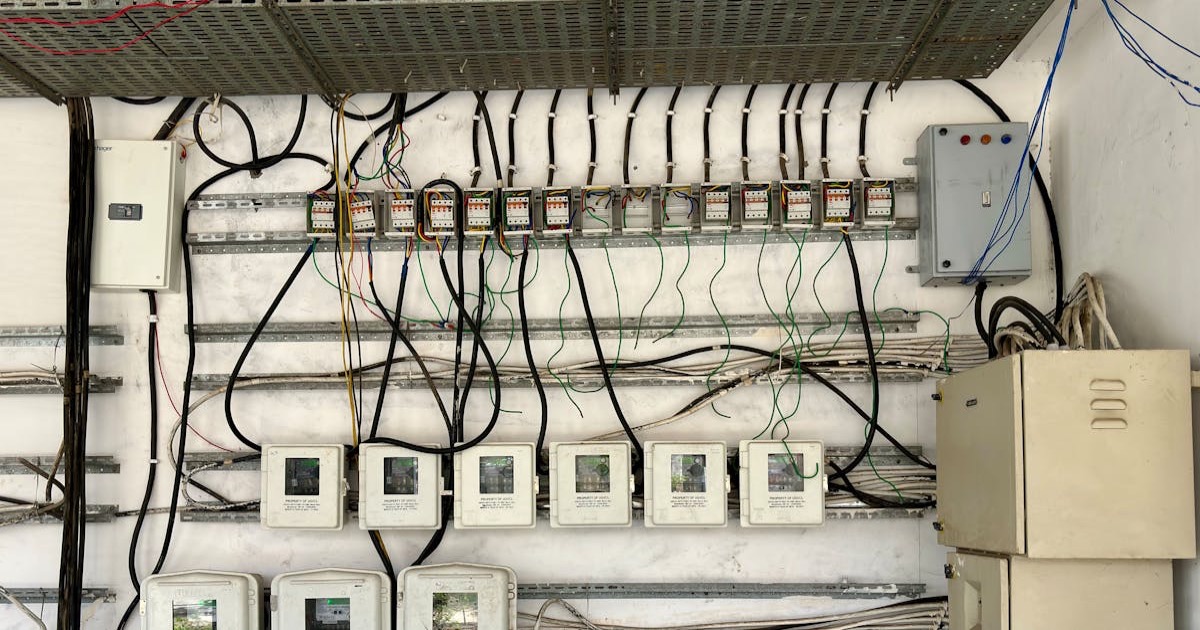
7 Electrical Warning Signs Every Homeowner Should Know
Your home gives you warning signs before an electrical fire starts. Flickering lights, burning smells, tripping breakers, and warm outlets are all red flags. Learn all 7 danger signals, what causes them, and exactly when you need to call a professional.
Home Electrical Inspection: What It Covers and How It Could Save Your Life
Electrical fires are the #1 cause of house fires in Canada. A professional electrical inspection catches hidden hazards before they become deadly. Here's exactly what inspectors check and why every Okanagan homeowner needs one annually.
10 Signs Your Furnace Needs Repair or Replacement (And How to Decide)
Is your furnace showing signs of trouble? This guide covers the 10 warning signs that your furnace needs attention, how to decide between repair and replacement, and what costs to expect for both options in British Columbia.