The Real Cost of Not Removing Snow: Liability, Damage, and Safety Risks
Not removing snow from your property can cost you thousands. Learn about BC liability laws, insurance risks, property damage, and safety stats for homeowners.
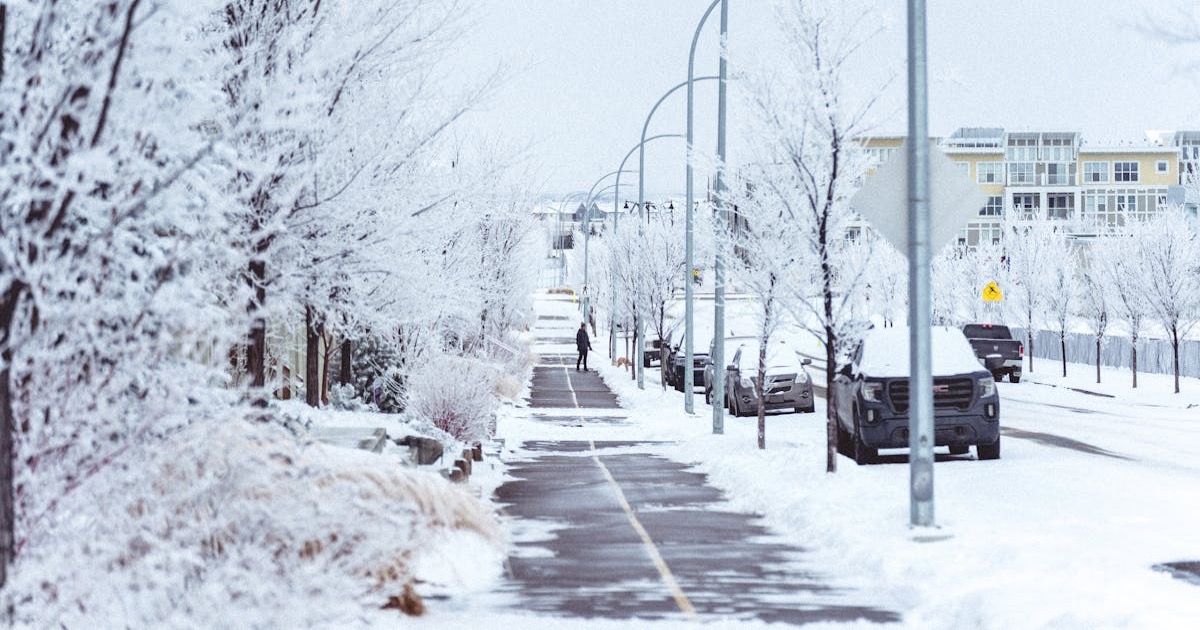
The Expensive Gamble of Skipping Snow Removal
Every winter, some Okanagan homeowners look at their snow-covered driveway and decide to leave it. Maybe they are trying to save money. Maybe they assume the snow will melt on its own in a few days. Maybe they just do not feel like dealing with it.
What these homeowners do not realize is that every day their property sits under uncleared snow and ice, they are accumulating risk - legal risk, financial risk, and physical safety risk that can dwarf the cost of a simple snow removal service.
The consequences of neglecting snow removal are not theoretical. Every year in British Columbia, homeowners face slip-and-fall liability claims, discover thousands of dollars in driveway damage come spring, deal with insurance complications, and in the worst cases, face the guilt of someone being seriously injured on their property.
This post breaks down exactly what is at stake when you choose not to remove snow from your property - with real numbers, real legal precedents, and real damage scenarios specific to the Okanagan.
Legal Liability: What BC Law Says About Your Snow
British Columbia law is clear: property owners are responsible for maintaining safe conditions on their property, and that includes dealing with snow and ice. Understanding your legal obligations is not optional - it is essential to protecting yourself and your assets.
The Occupiers Liability Act
BC's Occupiers Liability Act (RSBC 1996, Chapter 303) establishes the legal framework for property owner responsibility. Under this act, an "occupier" (which includes homeowners, tenants, and property managers) owes a duty of care to ensure that persons entering the property are reasonably safe.
The key legal standard is "reasonable care." Courts interpret this as the level of care that a reasonable, prudent property owner would take under the same circumstances. In winter, reasonable care unambiguously includes removing snow and ice from walkways, driveways, and other areas where people are expected to walk.
What "reasonable" does not mean is perfection. You are not expected to eliminate every trace of ice the moment it forms. But you are expected to take timely, consistent action to address snow and ice accumulation. The distinction matters because it defines where liability begins.
What Courts Look At in Slip-and-Fall Cases
When a slip-and-fall case involving snow and ice goes to court in BC, judges evaluate several factors:
1. Was the hazard known or foreseeable? Snow and ice after a snowfall in the Okanagan is always foreseeable. You cannot argue that you did not expect ice to form on your walkway in January. Courts treat winter ice as a known hazard that property owners are expected to proactively manage.
2. What steps did the property owner take? This is where documentation matters. Courts look at whether you had a snow removal arrangement in place, whether your property was cleared after the snowfall event in question, and how much time elapsed between the snowfall and the injury.
3. Was the response timely? Generally, courts expect property owners to address snow and ice accumulation within a reasonable time after snowfall ends. For walkways and steps, "reasonable" is typically interpreted as 4 to 12 hours. Leaving your walkway icy for two days after a snowfall is difficult to defend.
4. Were adequate methods used? Simply shoveling snow is not always sufficient. Courts also look at whether de-icing products were applied, whether packed ice was addressed, and whether the property owner used methods appropriate to the conditions.
Municipal Bylaws Add Another Layer
Beyond the Occupiers Liability Act, most Okanagan municipalities have specific bylaws requiring snow and ice removal:
City of Kelowna: Property owners must clear snow and ice from adjacent sidewalks within 24 hours after snowfall ends. The city can enforce compliance through bylaw officers and may clear neglected sidewalks at the property owner's expense.
City of West Kelowna: Similar requirements for sidewalk clearing. Property owners are responsible for maintaining safe pedestrian access adjacent to their property.
City of Vernon: Requires property owners to clear snow from sidewalks adjacent to their property. Non-compliance can result in enforcement action.
District of Peachland, District of Summerland, District of Lake Country: Each has bylaws addressing property owner responsibilities for snow and ice on adjacent public walkways.
City of Penticton: Property owners are expected to maintain clear, safe sidewalks adjacent to their lots during winter.
These bylaws create a regulatory obligation on top of the common-law duty of care. Violating a municipal bylaw strengthens a liability claim because it demonstrates that the property owner failed to meet even the minimum legal standard.
Snow Removal & Salting
Starting at $60/visit - included in your plan
The Financial Cost of Slip-and-Fall Claims
Liability is not abstract. It translates directly into financial consequences that can be severe for homeowners.
What Slip-and-Fall Injuries Cost
Slip-and-fall injuries on icy surfaces are among the most common winter injury claims in BC. The medical and legal costs associated with these injuries are substantial:
Common injuries from slipping on ice:
- Wrist fractures (the most common, from bracing a fall): Treatment cost $3,000 to $8,000
- Hip fractures (particularly in older adults): Treatment cost $15,000 to $40,000+, with lengthy rehabilitation
- Ankle fractures and sprains: Treatment cost $2,000 to $10,000
- Back and spinal injuries: Treatment cost $5,000 to $100,000+ depending on severity
- Concussions and traumatic brain injuries: Treatment cost $10,000 to $200,000+
- Shoulder dislocations and rotator cuff tears: Treatment cost $5,000 to $20,000
Average Claim Values in BC
Personal injury claims in BC for slip-and-fall injuries on residential property typically settle in these ranges:
- Minor injuries (sprains, soft tissue damage, minor fractures): $10,000 to $30,000
- Moderate injuries (fractures requiring surgery, extended recovery): $30,000 to $80,000
- Serious injuries (hip fractures in elderly, spinal injuries, TBI): $80,000 to $300,000+
- Catastrophic injuries (permanent disability, loss of independence): $300,000 to $1,000,000+
These amounts include pain and suffering, medical expenses, lost wages, rehabilitation costs, and future care costs. They do not include your own legal defense costs, which can run $10,000 to $50,000 even if the claim is ultimately settled by your insurance company.
Impact on Your Homeowner's Insurance
Most homeowner's insurance policies include liability coverage that pays for slip-and-fall claims. However, filing a liability claim has consequences:
Premium increases. After a liability claim, expect your premiums to increase by 10 to 30 percent at your next renewal. The increase typically persists for 3 to 5 years.
Policy non-renewal. If you have multiple claims - or even a single large claim - your insurer may choose not to renew your policy. Being non-renewed makes it significantly harder and more expensive to obtain coverage from another insurer.
Coverage limitations. Some policies have exclusions for "failure to maintain" the property. If your insurer determines that you consistently neglected snow removal and this negligence caused or contributed to the injury, they may dispute coverage or limit their payout.
Deductibles. Your policy deductible applies to liability claims. If your deductible is $1,000 to $2,500, you pay that amount out of pocket on every claim.
Who Can Sue You
It is not just invited guests who can file claims. Under the Occupiers Liability Act, you owe a duty of care to virtually anyone who comes onto your property:
- Delivery drivers (Amazon, FedEx, UPS, food delivery)
- Mail carriers (Canada Post)
- Utility workers (BC Hydro, FortisBC, internet/cable technicians)
- Emergency responders (paramedics, firefighters, RCMP)
- Neighbours and their children
- Door-to-door salespeople and canvassers
- Real estate agents showing nearby properties who may walk up to your door
The common thread is that all of these people have a reasonable expectation that your walkway and front entrance will be maintained in a safe condition. If you know people regularly come to your door - and in the age of home delivery, they do - you have a heightened obligation to keep those pathways clear.
Snow Removal & Salting
Starting at $60/visit - included in your plan
Property Damage: What Snow and Ice Do to Your Home
Liability claims get the headlines, but the slow, cumulative damage that unmanaged snow and ice inflict on your property is equally costly - you just do not get a dramatic lawsuit to mark the occasion. Instead, you get a steadily deteriorating driveway, damaged foundation, and compromised roof.
Driveway Damage from Freeze-Thaw Cycles
The freeze-thaw cycle is the single greatest threat to driveways and walkways in the Okanagan. Here is how it works:
-
Water infiltration. Rain, snowmelt, and runoff seep into hairline cracks and pores in your driveway surface. Both asphalt and concrete are porous to varying degrees.
-
Freezing and expansion. When the temperature drops below zero, that water freezes. Water expands by approximately 9 percent when it turns to ice. This expansion generates enormous pressure inside the crack - up to 2,000 pounds per square inch.
-
Thawing and deeper penetration. When the temperature rises again, the ice melts. But the crack is now slightly wider than before. More water enters, penetrating deeper.
-
Repeated cycling. The Okanagan typically experiences 40 to 60 freeze-thaw cycles per winter. Each cycle widens existing cracks and creates new ones. Over a single winter, a hairline crack can become a significant fissure. Over several winters without maintenance, the surface begins to crumble, spall, and develop potholes.
Snow left on driveways accelerates this process. Uncleared snow acts as an insulating blanket that moderates temperature extremes, keeping the surface at or near zero degrees for extended periods. This increases the number of freeze-thaw transitions the surface experiences. Additionally, as snow melts from the bottom (warmed by the ground and any sub-surface heat), it continuously supplies water to cracks and pores.
The Cost of Driveway Repair and Replacement
Driveway damage that accumulates over years of neglected snow removal is expensive to fix:
| Repair Type | Typical Cost |
|---|---|
| Crack sealing (asphalt) | $100 to $300 |
| Patching and spot repairs | $200 to $800 |
| Asphalt overlay (resurfacing) | $2,000 to $5,000 |
| Full asphalt driveway replacement | $4,000 to $10,000 |
| Concrete driveway replacement | $8,000 to $18,000 |
| Interlocking paver driveway replacement | $12,000 to $25,000 |
Compare these costs to the $1,300 annual cost of professional snow removal ($65 per event, 20 events per season). Regular snow removal, combined with periodic crack sealing and surface treatment, can extend your driveway's lifespan by 10 to 15 years.
Foundation Damage from Snow Accumulation
Snow piled against your foundation is a slow-motion disaster:
Moisture intrusion. As snow melts against your foundation walls, water seeps into any cracks or pores in the concrete. This water can enter your basement or crawl space, causing dampness, mold growth, and structural damage.
Hydrostatic pressure. Large volumes of snowmelt saturating the soil around your foundation increase hydrostatic pressure against basement walls. Over time, this pressure can cause wall bowing, cracking, and water infiltration.
Foundation heaving. In severe cases, water freezing in the soil adjacent to your foundation can cause frost heaving - the physical lifting and shifting of the foundation. This can crack foundation walls, misalign door frames, and cause structural settling.
Prevention is straightforward: Keep snow cleared at least 1 to 2 feet away from your foundation walls. When snow removal operators pile snow, it should be directed away from the house, not banked against the foundation.
Roof and Gutter Damage
We covered ice dams extensively in our ice dam prevention guide, but the key points bear repeating in the context of cost:
- Roof damage from ice dams: $2,000 to $10,000
- Gutter replacement from ice damage: $1,500 to $4,000
- Interior water damage from ice dam leaks: $3,000 to $15,000
- Mold remediation from moisture intrusion: $2,000 to $10,000
Heavy snow loads on roofs also create structural concerns. While Okanagan homes are built to handle typical snow loads, extended periods without melting or clearing can push older roofs toward their limits, particularly flat or low-slope roof sections.
Snow Removal & Salting
Starting at $60/visit - included in your plan
Safety Statistics: The Human Cost
Beyond property and legal concerns, neglecting snow removal creates genuine safety hazards for everyone who interacts with your property, including you and your family.
Winter Injury Data in Canada
The numbers are sobering:
- Falls on ice and snow are the leading cause of winter injury-related emergency room visits in Canada
- Approximately 20,000 Canadians are hospitalized each year due to fall-related injuries in winter, with icy surfaces being the primary contributing factor
- Hip fractures from falls on ice are particularly devastating for older adults: 30 percent of adults over 65 who fracture a hip die within one year, and 50 percent never regain their previous level of independence
- Snow shoveling itself causes approximately 11,500 emergency room visits per year in North America, including hundreds of heart attacks. Professional snow removal eliminates this risk entirely
Slip-and-Fall Risk Factors on Residential Properties
Not all surfaces are equally dangerous. Understanding where falls are most likely to occur helps prioritize your snow and ice management:
Highest risk areas:
- Steps and stairs - The combination of elevation change, narrow tread depth, and ice accumulation makes steps the single most dangerous feature of a winter property. Ice on a single step can cause a devastating fall.
- Transition zones - Where a cleared surface meets an uncleared surface, or where different surface materials meet (concrete to asphalt, asphalt to gravel), traction changes abruptly, catching people off guard.
- Sloped surfaces - Even a gentle slope becomes treacherous when covered in ice. Sloped driveways and walkways require extra attention.
- Shaded areas - North-facing surfaces and areas shaded by buildings, fences, or trees stay icy long after sun-exposed surfaces have thawed.
- Downspout discharge areas - Where gutters discharge water onto walkways or driveways, ice forms faster and more frequently than surrounding areas.
Risk multipliers:
- Early morning - Overnight refreezing creates black ice on surfaces that may have been merely wet the evening before
- Changing conditions - A day that starts above zero and drops below freezing by late afternoon creates icy conditions that catch people off guard
- Fresh snowfall over ice - A thin layer of snow on top of ice is exceptionally dangerous because it hides the slippery surface beneath
Vulnerable Populations
Certain groups face disproportionately higher risk from icy conditions on residential properties:
Older adults: Reduced balance, slower reflexes, lower bone density, and higher rates of medication use (some medications affect balance) make older adults extremely vulnerable to falls on ice. A fall that causes a bruise in a 30-year-old can cause a life-altering hip fracture in a 70-year-old.
Children: Low center of gravity helps with balance, but children often run rather than walk and are less likely to recognize and avoid icy patches.
Delivery workers: They carry packages that obstruct their view of the ground, wear work footwear that may not have winter-appropriate treads, and must navigate unfamiliar properties multiple times per day.
People with mobility challenges: Anyone using a cane, walker, wheelchair, or other mobility aid faces amplified risk on icy surfaces.
Snow Removal & Salting
Starting at $60/visit - included in your plan
The Math: Snow Removal Cost vs Risk Cost
When you put actual numbers on the risks of not removing snow, the value of professional snow removal becomes overwhelming:
Annual Snow Removal Cost
- 20 snow events x $65 per event = $1,300 per season
- That is approximately $6.50 per day during the winter months (November through March)
- Less than a daily coffee from most Okanagan coffee shops
Potential Cost of NOT Removing Snow
| Risk | Probability per Year | Average Cost |
|---|---|---|
| Slip-and-fall liability claim | 1 to 3% | $10,000 to $300,000 |
| Driveway resurfacing (accelerated wear) | 5 to 10% over 5 years | $3,000 to $10,000 |
| Insurance premium increase after claim | 30% (if claim filed) | $300 to $800/year for 3-5 years |
| Foundation moisture damage | 2 to 5% per year | $2,000 to $15,000 |
| Ice dam and roof damage | 5 to 10% per year | $2,000 to $10,000 |
| Snow shoveling injury (DIY) | 3 to 5% per year | $500 to $50,000 |
| Municipal bylaw fine | 1 to 3% | $100 to $500 |
Even using conservative probability estimates, the expected annual cost of risk from not removing snow (probability times cost) significantly exceeds the $1,300 annual cost of professional service.
And these figures do not account for the intangible costs: the stress of dealing with an injury claim, the guilt of someone being hurt on your property, the time spent on insurance paperwork, or the disruption of emergency driveway or foundation repairs.
The Insurance Perspective
Insurance professionals will tell you that snow removal is one of the clearest cases of "preventive maintenance that reduces claims." Some insurers in BC are beginning to ask about snow removal arrangements during policy applications, and properties with professional snow removal may qualify for slightly lower liability premiums.
More importantly, having documented professional snow removal service strengthens your position if a claim is ever filed. It demonstrates that you took reasonable steps to maintain safe conditions - the core test under the Occupiers Liability Act.
What Responsible Snow Management Looks Like
Based on the legal, financial, and safety considerations outlined above, here is what responsible residential snow management looks like for Okanagan homeowners:
The Minimum Standard
At bare minimum, every Okanagan homeowner should:
- Clear walkways and steps within 8 hours of snowfall ending
- Apply de-icing product to steps and high-traffic walkways after every clearing
- Clear driveways within 12 to 24 hours of snowfall ending
- Address ice formation promptly, especially on steps and transition areas
- Keep snow away from the foundation by directing snow piles at least 1 to 2 feet from walls
- Comply with municipal bylaws regarding adjacent sidewalk clearing
The Recommended Standard
For homeowners who want to minimize risk and protect their property:
- Hire a professional snow removal service with automatic triggers, guaranteed response times, and proof of insurance
- Include de-icing service as part of every snow removal visit
- Maintain a supply of de-icing product for spot treatment between service visits
- Keep a documented record of snow removal service dates and times
- Address ice proactively in known problem areas (shaded walkways, downspout discharge zones)
- Inspect your driveway each spring for damage and address cracks before the next winter
The My Home Plan Approach
A home maintenance subscription handles the professional side of snow management as part of a comprehensive, year-round service:
- Automatic snow removal at $65 per event, with no contract negotiation or provider management
- Consistent, reliable service backed by a company that manages your property year-round
- Integration with related services like gutter cleaning (which prevents ice dams) and spring driveway inspection
- One provider, one relationship, one monthly payment that covers winter and every other season
The Bottom Line
Snow removal is not an optional luxury for Okanagan homeowners. It is a legal obligation, a financial protection measure, and a safety requirement. The $1,300 annual cost of professional snow removal is trivial compared to the potential costs of a liability claim, accelerated property damage, or a preventable injury.
The homeowners who fare best through Okanagan winters are not the ones who shovel the most snow themselves. They are the ones who have a reliable system in place before the first snowflake falls - and then do not have to think about it again until spring.
Do not gamble with your property, your finances, or the safety of everyone who walks up to your front door. Make snow removal part of your home maintenance plan.
Ready to simplify your home maintenance?
Get all your home services in one monthly plan. Vetted contractors, guaranteed scheduling, predictable pricing.
Frequently Asked Questions
Why Homeowners Choose My Home Plan
Predictable Pricing
One monthly payment covers everything. No surprise quotes or hidden fees.
Vetted Contractors
Every contractor is background-checked, insured, and reviewed.
Zero Hassle
We handle scheduling, quality control, and follow-ups. You relax.
Related Articles
How to Prevent Ice Dams and Dangerous Ice Buildup on Your Home
Ice dams and ice buildup cause thousands of dollars in damage to Okanagan homes every winter. Learn the science behind ice dams, compare de-icing products, understand your liability as a property owner, and discover prevention strategies that actually work.
Snow Removal Services in the Okanagan: Complete Cost Guide for 2026
Wondering what snow removal costs in the Okanagan? This guide breaks down per-event pricing, seasonal contracts, what's included in professional service, and how to choose the right provider for Kelowna, West Kelowna, Vernon, Penticton, and Lake Country.
The Ultimate Winter Home Maintenance Checklist for Okanagan Homeowners
A comprehensive 20-item winter home maintenance checklist built specifically for Okanagan homeowners. From pipe protection and heating system prep to snow removal planning and emergency readiness, this guide covers everything you need to winterize your home in Kelowna, West Kelowna, Vernon, Penticton, and beyond.