Okanagan Wildfire Home Protection Guide: FireSmart Landscaping and Home Hardening
Protect your Okanagan home from wildfire with this FireSmart landscaping and home hardening guide. Practical steps for Kelowna, West Kelowna, and Vernon.

The Okanagan's Wildfire Reality
The Okanagan Valley is one of the highest wildfire risk zones in Canada. The combination of hot, dry summers, extensive wildland-urban interface, steep terrain, frequent lightning, and pine beetle-killed forests creates conditions where wildfire is not a matter of if but when.
The devastating wildfires that have swept through Kelowna, West Kelowna, Vernon, Peachland, and surrounding communities in recent years have made this risk personal for thousands of homeowners. Entire neighbourhoods have been threatened. Homes have been lost. Evacuation orders have become a summer routine.
But here is what research consistently shows: homes with proper FireSmart landscaping and structural hardening survive wildfire at dramatically higher rates than those without. The FireSmart Canada program, backed by decades of research and post-fire analysis, has identified specific, practical measures that any homeowner can implement to protect their property.
This guide breaks down exactly what you need to do, organized by priority, with specific recommendations for the Okanagan's landscape and building conditions.
How Homes Ignite During Wildfire
Understanding how homes catch fire is essential for protecting them. Contrary to what many people assume, most homes destroyed in wildfires are not consumed by a wall of flame. They ignite from embers - burning fragments carried by wind ahead of the fire front, sometimes for kilometres.
Embers land on and around structures, and they ignite anything combustible they contact: dry leaves in gutters, pine needles on roofs, wood mulch against foundations, stacked firewood, wooden decks, and any other combustible material in or near the home.
This means your home's survival depends less on whether a fire passes directly over your property and more on whether your property has combustible materials that embers can ignite. Removing, reducing, and managing those combustible materials is the core of FireSmart home protection.
The Three Ignition Pathways
Direct flame contact. Fire reaches your home through continuous combustible vegetation, fencing, or stored materials. This is addressed through fuel breaks and vegetation management.
Radiant heat. Intense heat from nearby burning vegetation or structures ignites combustible elements of your home - typically vinyl siding, window frames, or exterior trim. This is addressed through vegetation setbacks and fire-resistant building materials.
Ember exposure. Airborne embers land on combustible surfaces on or near your home and ignite. This is addressed through home hardening, debris removal, and maintaining the non-combustible zone.
Of these three, ember exposure is responsible for the majority of home ignitions during wildfire. This is why the non-combustible zone and debris management are so critical.
FireSmart Priority Zones
The FireSmart program divides the area around your home into three zones, each with specific recommendations. Working from the home outward, here is what to do in each zone.
Zone 1: The Non-Combustible Zone (0 to 1.5 Metres)
This is the most critical zone. The 1.5-metre perimeter immediately surrounding your home should be completely non-combustible.
Ground cover: Replace all organic materials (wood mulch, bark, plants) within 1.5 metres of your home with non-combustible alternatives:
- Gravel or decorative rock (10 to 15 centimetres deep)
- Concrete or paver patios
- Bare mineral soil
- Stone or brick walkways
Under decks: The area beneath raised decks is one of the highest risk zones on any property. Embers blown under a deck can ignite accumulated debris and the deck structure itself, which then ignites the house. Enclose the underside of your deck with fire-resistant screening or skirting, and keep the area completely free of combustible storage.
Against the house: Remove all combustible items within 1.5 metres of your exterior walls:
- Firewood stacks
- Lumber, building materials, and cardboard
- Patio furniture with fabric cushions (store indoors during high-risk fire weather)
- Recycling and garbage bins
- Combustible planters and trellises
Vegetation: No combustible plants within 1.5 metres of the home. If you want greenery in this zone, use non-combustible planters with well-watered, low-growing plants that are maintained free of dead material.
Zone 1A: Extended Priority Zone (1.5 to 10 Metres)
This zone surrounds the non-combustible perimeter and extends to 10 metres from your home. The goal here is to create a landscaped area with well-spaced, well-maintained, fire-resistant plants that do not provide a continuous fuel path to your home.
Trees: Space trees so their crowns are at least 3 metres apart. Remove lower branches to a height of 2 metres or one-third of the tree's height, whichever is greater. This prevents ground fire from climbing into the tree canopy (called "laddering").
Shrubs: Use low-growing deciduous shrubs rather than conifers. Keep shrubs at least 3 metres from tree canopies. Avoid planting shrubs directly under windows or against walls.
Lawn: A well-maintained, irrigated lawn is one of the best fire-resistant ground covers. Keep grass short (8 centimetres or less during fire season) and green.
Combustible structures: Fences connecting to the house should transition to non-combustible material (metal or masonry) within this zone. Wooden fences directly connected to a home create a fuse that can carry fire from the landscape to the structure.
Zone 2: Intermediate Zone (10 to 30 Metres)
This zone is managed to reduce fire intensity and slow fire spread. The standards are less strict than Zone 1A but still important.
- Thin trees so crowns are spaced 3 to 6 metres apart.
- Remove dead trees, branches, and fallen debris regularly.
- Prune lower branches to prevent ladder fuels.
- Break up continuous shrub and vegetation cover with pathways, rock features, or irrigated lawn.
- Maintain any outbuildings (sheds, garages, workshops) in this zone with the same principles as the house - non-combustible zone around them, debris-free roofs and gutters, and fire-resistant siding.
Zone 3: Extended Zone (30 to 100 Metres)
If your property extends to 30 metres or more, this outer zone should be managed to reduce overall fire intensity. For many Okanagan properties that border Crown land or undeveloped areas, this zone may be partially or fully outside your property boundary.
- Thin forest to reduce canopy density.
- Remove dead standing trees (snags) and downed woody debris.
- Create fuel breaks using pathways, driveways, or cleared strips.
- Work with neighbours and your municipality on community-level fuel management programs.
Home Hardening: Structural Modifications
Beyond landscaping, the structure of your home itself can be modified to resist wildfire ignition.
Roof
Your roof is the largest ember-catching surface on your home and the most critical structural element for wildfire resistance.
Fire-rated roofing materials. Asphalt shingles, metal roofing, clay tiles, and concrete tiles are all rated for fire resistance. If your home has wood shake roofing, replacing it with a fire-rated material is the single most important structural upgrade you can make for wildfire protection. Wood shake roofs are extremely vulnerable to ember ignition.
Roof cleanliness. Regardless of roofing material, keep your roof free of accumulated debris. Pine needles, leaves, and moss on your roof are fire fuel. Clean your roof at the start of fire season and check it monthly through summer.
Roof vents. Standard roof vents can allow embers to enter your attic space. Install 3-millimetre metal mesh screening behind all roof vents, soffit vents, and gable vents to block embers while maintaining ventilation.
Gutters
Gutters accumulate combustible debris - pine needles, leaves, seeds - that embers can easily ignite. A gutter fire spreads directly to the fascia, soffit, and roof edge.
- Clean gutters monthly during fire season.
- Install metal gutter guards to reduce debris accumulation.
- Consider non-combustible gutter materials if replacing gutters.
Siding and Exterior Walls
Non-combustible siding (stucco, brick, stone, fibre cement) provides the best protection. Vinyl siding can melt and deform from radiant heat, exposing the sheathing underneath. Wood siding is directly combustible.
If you have vinyl or wood siding, maintaining the non-combustible zone and Zone 1A becomes even more critical because your walls are vulnerable to both radiant heat and ember exposure.
Windows
Windows are a significant vulnerability. Single-pane glass can crack from radiant heat at distances that may surprise you. Large windows facing the wildland are especially at risk.
- Tempered or double-pane glass resists heat significantly better than single-pane.
- Close all windows and doors when wildfire threatens your area.
- Install metal mesh screens on windows to deflect embers.
Decks
Decks are one of the most common ignition points for homes during wildfire. The deck surface catches embers, the gaps between boards allow embers to access the space underneath, and the substructure is often surrounded by combustible debris and storage.
Deck surface: Fire-resistant composite decking, metal, or concrete/stone surfaces are more resistant than wood. If your deck is wood, maintain it well - weathered, cracked wood ignites more readily than well-maintained wood.
Underneath the deck: Enclose the underside with non-combustible skirting. Remove all stored items. Keep the area completely free of debris, leaves, and vegetation.
Railing: Non-combustible railing materials (metal, glass, cable) are preferred in high-risk areas.
Fire-Resistant Plant Choices for the Okanagan
The Okanagan supports a wide variety of plants suitable for fire-resistant landscaping. The key principles are: high moisture content, low resin and oil content, deciduous over evergreen, and maintained free of dead material.
Recommended Trees
| Tree | Why It Works |
|---|---|
| Trembling aspen | High moisture content, fire-resistant bark |
| Paper birch | Deciduous, moderate moisture content |
| Mountain ash | Deciduous, open canopy, moderate size |
| Apple, cherry, pear (fruit trees) | High moisture, low resin, irrigated |
| Red maple | Dense, moist foliage, deciduous |
Trees to Avoid Near the Home
| Tree | Why It Is Risky |
|---|---|
| Ponderosa pine | High resin content, flammable needles, bark |
| Douglas fir | Dense, resinous, retains dead lower branches |
| Spruce | Extremely flammable, dense branch structure |
| Juniper | One of the most flammable landscape plants |
| Cedar | High oil content, extremely flammable |
Recommended Shrubs
Lilac, mock orange, dogwood, spirea, potentilla, rose (wild or cultivated), and Oregon grape are all good choices for the Okanagan. Keep all shrubs well-watered, pruned, and free of dead material.
Shrubs and Ground Covers to Avoid
Juniper (all species), cedar hedges, ornamental grasses (especially when dormant), mugo pine, and any dense evergreen shrub. These plants contain high levels of volatile oils and burn intensely.
Seasonal FireSmart Maintenance Calendar
May: Fire Season Preparation
- Create or refresh the 1.5-metre non-combustible zone
- Clean roof and gutters of all debris
- Prune trees to maintain 3-metre clearance from roof
- Remove dead vegetation and fallen branches from all zones
- Move firewood storage to 10 metres from the house
- Clear under decks and enclose with skirting if not done
- Ensure emergency kit and evacuation plan are current
June through August: Ongoing Maintenance
- Clean roof and gutters monthly
- Maintain non-combustible zone - remove any debris or fallen material
- Keep lawn mowed to 8 centimetres or shorter
- Water landscape plants in Zone 1A to maintain moisture content
- Monitor for dead branches and remove promptly
- Keep garden hoses connected and accessible
- Stay aware of fire danger ratings and fire bans
September: End of Season
- Major cleanup of all zones before fall leaf drop buries debris
- Final tree pruning before winter
- Assess any needed improvements for next season
- Document your FireSmart efforts with photos for insurance purposes
Working with Your Community
Wildfire protection works best as a community effort. A single well-prepared property surrounded by unprepared neighbours is still at significant risk from ember exposure from adjacent homes and landscapes.
Talk to your neighbours about FireSmart preparation. Share resources and offer to coordinate efforts.
Participate in community FireSmart programs. Many Okanagan communities, including Kelowna, West Kelowna, Vernon, Penticton, Lake Country, Summerland, and Peachland, have active FireSmart committees and community assessment programs.
Attend local FireSmart events. The Okanagan hosts regular FireSmart information sessions, home assessment clinics, and chipping programs where you can dispose of cleared vegetation for free.
Request a free home assessment. Many Okanagan communities offer free or subsidized FireSmart home assessments by trained assessors who walk your property and provide specific recommendations.
Insurance Implications
Wildfire risk is increasingly affecting home insurance availability and pricing in the Okanagan. Some insurers are restricting coverage in high-risk wildland-urban interface areas, increasing premiums, or requiring specific mitigation measures.
Documenting your FireSmart efforts - photos, receipts for materials, records of maintenance - may help you:
- Maintain or reduce your insurance premiums
- Demonstrate compliance with insurer requirements
- Support claims if damage does occur
- Access community FireSmart recognition programs
Contact your insurance provider to ask whether FireSmart compliance affects your policy. Many insurers are beginning to offer incentives for properties that meet FireSmart standards.
Let My Home Plan Maintain Your FireSmart Property
Creating a FireSmart property requires initial effort, but maintaining it is an ongoing commitment that spans the entire fire season. Gutters need monthly cleaning. The non-combustible zone needs regular debris removal. Trees need annual pruning. Lawn needs consistent mowing and watering.
With a My Home Plan subscription, your FireSmart maintenance is built into your service schedule. Gutters are cleaned on schedule, lawn care maintains the green, fire-resistant ground cover your property needs, tree trimming keeps clearances where they should be, and your roof stays clear of debris. You get the protection without the constant vigilance.
In the Okanagan, wildfire preparation is not optional. Let us help you stay protected all season long.
Frequently Asked Questions
Why Homeowners Choose My Home Plan
Predictable Pricing
One monthly payment covers everything. No surprise quotes or hidden fees.
Vetted Contractors
Every contractor is background-checked, insured, and reviewed.
Zero Hassle
We handle scheduling, quality control, and follow-ups. You relax.
Related Articles
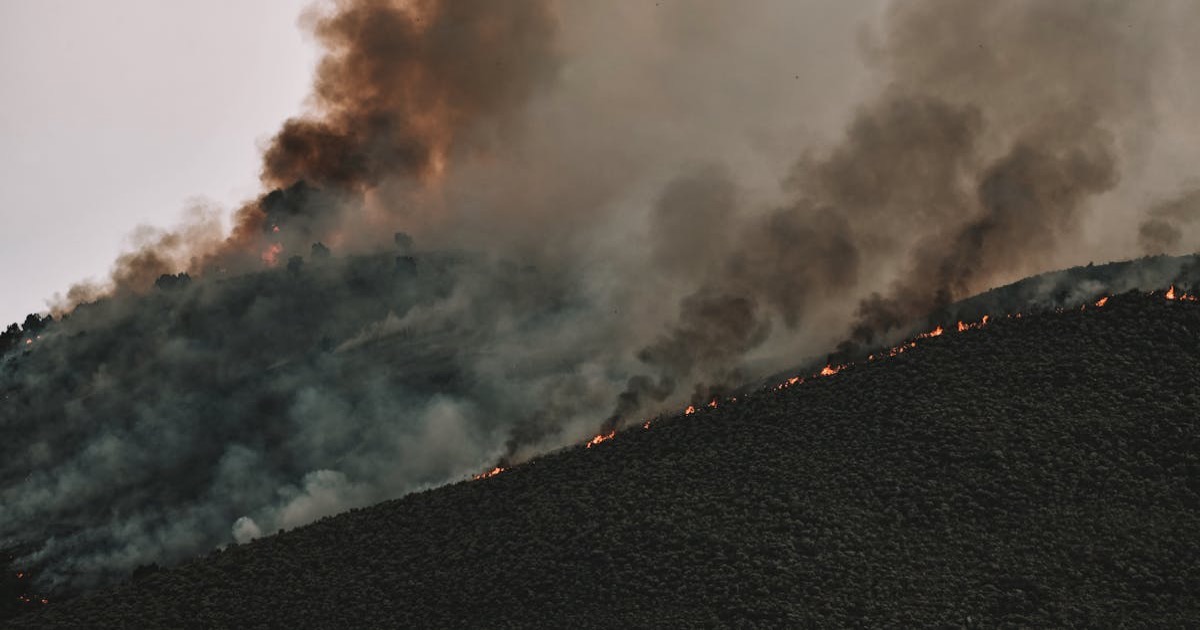
Preparing Your Okanagan Home for Wildfire Season: A Complete FireSmart Guide
Wildfires are not a hypothetical threat in the Okanagan - they are a recurring reality. This comprehensive guide covers everything you need to know about preparing your home for fire season, from FireSmart defensible space to roof maintenance, gutter cleaning, emergency planning, and insurance considerations.

Summer Home Maintenance Checklist for the Okanagan: Your Complete Guide
Summer in the Okanagan pushes your home to its limits. Extreme heat, wildfire risk, heavy outdoor use, and drought conditions all demand specific maintenance. This complete checklist covers every task Okanagan homeowners need to handle from June through August.
Fall Yard Cleanup Guide: How to Winterize Your Okanagan Property
The work you do in fall determines whether your Okanagan property emerges from winter in good shape or needs expensive repairs come spring. This guide covers every step of fall yard cleanup and winterization.