Preparing Your Okanagan Home for Wildfire Season: A Complete FireSmart Guide
Protect your Okanagan home from wildfire with this complete FireSmart guide. Defensible space, roof prep, gutter cleaning, and evacuation planning for BC Interior.
Wildfire is Not a Question of If, but When
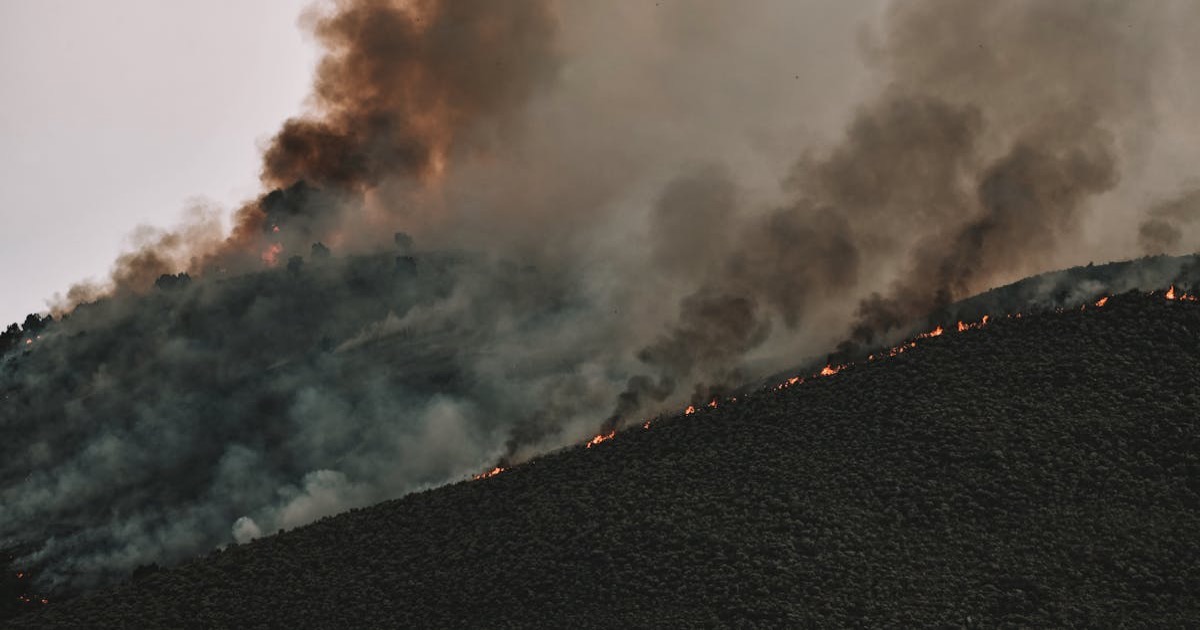
If you own a home in the Okanagan Valley, you live in one of the most fire-prone regions in Canada. This is not alarmist language - it is a statement of geographic and climatic fact. The combination of hot, dry summers, pine-dominated forests, steep terrain, and a growing urban-wildland interface makes the Okanagan a place where wildfire is a recurring and intensifying threat.
The 2023 fire season burned over 2.8 million hectares across British Columbia, with multiple fires threatening communities in the Okanagan, including the Kelowna area, West Kelowna, and Peachland. Thousands of residents were evacuated. Homes were lost. The 2003 Okanagan Mountain Park fire destroyed 239 homes in Kelowna. The 2017 and 2018 seasons were among the worst in BC history. And the trend is accelerating - fire seasons are starting earlier, burning hotter, and lasting longer.
The question every Okanagan homeowner needs to ask is not whether wildfire will threaten their community, but whether their home will be prepared when it does. The good news is that preparation works. Research consistently shows that homes with properly maintained defensible space and fire-resistant features are dramatically more likely to survive a wildfire, even when surrounding vegetation burns.
This guide covers everything you need to do to protect your Okanagan home from wildfire, organized by priority so you can start with the highest-impact actions and work your way through.
Understanding How Homes Ignite During Wildfires
Before we get into the specific preparation steps, it is important to understand how wildfire actually threatens your home. Most people picture a wall of flame rolling through their yard, but that is rarely how homes catch fire during wildfire events.
Ember Attack: The Primary Threat
The number one way homes ignite during wildfires is ember attack. Burning embers - also called firebrands - are carried by wind currents ahead of the fire front, sometimes travelling kilometres before landing. These embers are small, but they are hot enough to ignite any combustible material they land on.
Embers accumulate in gutters, on roofs, in open eaves, under decks, and against siding. A single ember landing in a gutter full of dry pine needles can ignite your roof. An ember settling on a wooden deck chair cushion pushed against your house can start a fire on your siding. This is why preparation focused on removing combustible materials near your home is so effective - you are eliminating the ignition points that embers target.
Radiant Heat
The second threat is radiant heat from burning vegetation or structures nearby. If a tree within 10 metres of your home is fully involved in fire, the radiant heat can be intense enough to ignite your siding, melt vinyl windows, and crack glass, even without direct flame contact.
Direct Flame Contact
Direct flame contact - fire actually reaching your home - is the least common ignition method, but it does occur. This typically happens when fire travels through continuous vegetation right up to the structure, or when a connected fence, deck, or outbuilding catches fire and extends to the main home.
Understanding these three pathways makes the logic behind every preparation step in this guide clear: you are reducing combustible materials near your home (addressing ember attack), creating distance between vegetation and your structure (addressing radiant heat), and breaking continuous fuel pathways (addressing direct flame contact).
My Home Plan
Plans starting at $89/mo - all services included
FireSmart Priority Zones: Your Defensible Space
The FireSmart Canada program organizes property preparation into three priority zones based on distance from the home. Each zone has specific guidelines designed to reduce fire risk progressively as you move outward from the structure.
Priority Zone 1: The Non-Combustible Zone (0-1.5 metres)
This is the most critical zone and the one where your efforts have the greatest impact on your home's survival. The goal for Zone 1 is simple: make the area immediately around your home completely non-combustible.
Ground surface. Replace bark mulch, wood chips, and organic ground covers with non-combustible alternatives: gravel, decorite stone, concrete pavers, or exposed mineral soil. Bark mulch ignites easily from embers and can burn slowly for hours, directing heat against your foundation and siding.
Vegetation. Remove all plants from Zone 1 except for carefully maintained, low-growing, fire-resistant species in isolated beds. No shrubs against the house, no vine-covered walls, no ornamental grasses against the siding.
Combustible items. Move everything combustible out of Zone 1: firewood stacks, lumber, recycling bins, patio furniture with cushions, door mats, and portable planters with dry peat moss. During peak fire season, this includes items you might normally keep close to the house for convenience.
Decks and porches. If your deck is within Zone 1, keep the surface and underside free of debris. Enclose the space beneath elevated decks with fire-resistant screening to prevent ember entry. Consider non-combustible deck skirting.
Roof and gutters. Clean all leaves, needles, and organic debris from your roof surface, valleys, and gutters. This is arguably the single most important preparation task. A clean roof with clear gutters removes the most vulnerable ignition point on your entire property.
Bark mulch is one of the most common combustible materials found in Zone 1 on Okanagan properties. Many homeowners use it extensively around foundation plantings without realizing it is a significant fire hazard. Replace bark mulch within 1.5 metres of your home with gravel or stone. This one change dramatically reduces your ember ignition risk.
Priority Zone 2: The Managed Zone (1.5-10 metres)
Zone 2 is about reducing fire intensity and preventing flame from reaching your home through continuous fuel.
Tree spacing. Space individual trees so their crowns are at least 3 metres apart. This prevents fire from spreading continuously from tree to tree in a crown fire scenario. Larger spacing is better - 6-metre spacing is ideal when practical.
Tree pruning. Remove lower branches to a height of at least 2 metres on all trees. This eliminates "ladder fuels" that allow ground fire to climb into the tree crowns. In the Okanagan's Ponderosa pine forests, low branches with dead needles are extremely effective ladder fuels.
Shrubs and understory. Keep shrubs well spaced and away from tree branches. Do not plant shrubs directly under trees where they create a continuous vertical fuel pathway from ground to crown.
Grass. Maintain grass at 10 centimetres or shorter. Tall, dry grass in the Okanagan summer is one of the fastest-spreading ground fuels. Regular mowing within Zone 2 is a significant fire risk reduction.
Firewood storage. If you need to store firewood on your property, keep it at the far outer edge of Zone 2, at least 10 metres from any structure. Stack it uphill from the house if your property slopes, and keep the area around the stack clear of grass and debris.
Priority Zone 3: The Thinning Zone (10-30 metres)
Zone 3 is about slowing an approaching fire and reducing its intensity before it reaches Zones 2 and 1.
Thin trees. Remove enough trees to create spacing of 3 to 6 metres between crowns. Focus on removing smaller, weaker trees and dead standing timber. The remaining trees should be the healthiest specimens.
Remove dead fuel. Clear fallen branches, dead trees, and accumulations of dead leaves and needles. In Okanagan pine forests, the accumulation of dead needles on the forest floor can be 10 to 15 centimetres deep. This creates an intense ground fire that generates the heat and embers that threaten your home.
Create fuel breaks. Where possible, use driveways, pathways, gravel areas, and other non-combustible features to create breaks in continuous vegetation. These breaks slow fire spread and can provide access for firefighting crews.
My Home Plan
Plans starting at $89/mo - all services included
Roof and Gutter Maintenance for Fire Season
Your roof is the largest and most vulnerable surface on your home during a wildfire. It faces upward, directly catching falling embers, and its slope can channel embers into valleys and gutters where they accumulate and ignite.
Roof Surface
Clean your roof. Remove all leaves, pine needles, moss, and organic debris from the entire roof surface. Pay particular attention to valleys where two roof planes meet, as debris accumulates there naturally. A leaf blower works for loose debris; moss may require scraping or chemical treatment.
Inspect your roofing material. Asphalt shingles are Class A fire-rated when new, but as they age and lose granules, their fire resistance decreases. If your shingles are nearing the end of their life - typically 20 to 25 years in the Okanagan's extreme UV environment - consider replacing them before fire season. Metal roofing and tile offer superior fire resistance and are increasingly popular in Okanagan new construction and renovations.
Check flashing and vents. Ensure all roof penetrations - vent pipes, exhaust fans, skylights - are properly flashed and sealed. Gaps around these penetrations are entry points for embers. Consider installing ember-resistant vent covers (1.5mm metal mesh) over all roof and soffit vents.
Gutters
Clean gutters thoroughly. This cannot be overstated. Gutters packed with dry pine needles are essentially a trough of tinder running along the edge of your roof. A single ember landing in a debris-filled gutter can ignite a fire that spreads to your roof, fascia, and soffit within minutes.
Schedule multiple gutter cleanings. In the Okanagan, one spring gutter cleaning is not enough for fire safety. Ponderosa pine needles shed continuously, and by July, gutters cleaned in April can be full again. Schedule a second cleaning in late June or early July specifically for fire season preparation.
Consider non-combustible gutter covers. Metal mesh gutter guards can reduce but not eliminate debris accumulation. They are a worthwhile supplement to regular cleaning, especially on properties surrounded by pine trees, which describes much of Kelowna, Lake Country, and Peachland.
When scheduling gutter cleaning for fire season, have the crew also clean needles from roof valleys, around chimneys, and from the tops of skylights. These areas accumulate debris that is invisible from ground level but highly vulnerable to ember ignition.
Building Exterior: Hardening Your Home
Beyond defensible space and roof maintenance, there are modifications to your home's exterior that significantly improve its ability to survive wildfire. Some of these are quick fixes; others are longer-term upgrades to consider when renovating or replacing building components.
Siding and Exterior Walls
Non-combustible siding like stucco, fibre cement (HardiePlank), stone, or metal offers significantly better fire resistance than wood or vinyl. If you are replacing siding, choose a fire-resistant material. If your home currently has wood siding, keep it in good condition - cracked, peeling, or deteriorating wood siding ignites more easily than well-maintained wood.
Close gaps. Any gap in your exterior wall where embers can enter is a vulnerability. This includes gaps around pipes, wires, vents, and at the junction of different materials. Seal gaps with fire-rated caulking or metal flashing.
Windows and Doors
Tempered or double-pane windows resist radiant heat better than single-pane glass. Single-pane windows can crack and shatter from radiant heat alone, allowing embers to enter the home. If you have single-pane windows, especially on the side of your home facing wildland areas, upgrading to double-pane is one of the highest-impact improvements you can make.
Install fine metal mesh on opening windows. Standard fibreglass window screens melt quickly in a fire. Metal mesh screens (1.5mm or finer) block ember entry while still allowing ventilation when fire is not immediately threatening.
Decks and Attachments
Enclose under-deck spaces. The space beneath elevated decks accumulates dead leaves, needles, and debris that is extremely vulnerable to ember ignition. Enclose this space with fire-resistant skirting or metal screening.
Consider non-combustible decking. When it comes time to replace your deck, concrete pavers, stone, or composite decking with fire-resistant ratings offer significantly better protection than wood. Some composite products carry Class A fire ratings.
Disconnect continuous fuel paths. If your deck connects to a fence, and that fence runs into natural vegetation, you have created a fuse that can carry fire from the wildland directly to your home. Break these connections with non-combustible sections or gaps.
My Home Plan
Plans starting at $89/mo - all services included
Emergency Preparedness
Even with perfect preparation, there are fire scenarios where evacuation is the only safe option. Being ready to leave quickly and efficiently can save your life and reduce the chaos of an emergency departure.
Your Emergency Kit
Assemble a grab-and-go kit that you can load in your vehicle in under 5 minutes. It should include:
- Important documents: insurance policies, identification, property titles, medical records (keep originals in a fireproof safe and copies in your kit)
- Medications for all family members, including pets
- Phone chargers, battery packs, and a battery-powered radio
- Water and non-perishable food for 72 hours
- First aid kit
- Cash (ATMs may not work during evacuations)
- Change of clothes and sturdy footwear for each family member
- Pet carriers, leashes, food, and vaccination records
Digital Preparedness
Document your entire home with photos and video. Walk through every room and record the contents. This is essential for insurance claims. Store this documentation in cloud storage, not on a local device that could be lost in the fire.
Digitize important documents. Scan insurance policies, identification, property assessments, receipts for major purchases, and family records. Upload everything to secure cloud storage.
Keep a digital inventory of valuables. List major items with their approximate value, purchase date, and photos. Update this inventory annually.
Your Evacuation Plan
Know your routes. Identify at least two evacuation routes from your property. In the Okanagan's valley geography, many communities have limited exit routes. Know the alternatives, especially if you live in areas like upper Glenmore, McKinley Landing, Joe Rich, or rural areas with single-road access.
Know your alerts. Register for your regional district's emergency notification system. Follow BC Wildfire Service on social media and through their mobile app. Monitor the Okanagan emergency management communications channels for your specific municipality.
Set family meeting points. Establish where family members will meet if separated during an evacuation. Choose locations outside the potential fire zone.
Practice. Walk through the evacuation process at least once per year. Time yourself loading the vehicle and departing. Identify bottlenecks and fix them before an actual emergency.
When an evacuation alert (be prepared to leave) is issued for your area, start loading valuables and essential items immediately. Do not wait for the order. Evacuation orders (leave now) can follow alerts with very little lead time, and the difference between being prepared and being caught off guard can be significant.
Insurance Considerations
Wildfire and home insurance in BC is a topic every Okanagan homeowner needs to understand, especially as fire seasons intensify and insurance markets respond.
Review Your Policy Annually
Most standard homeowner policies in BC cover wildfire damage, but the details matter enormously. Review your policy each year and verify:
- Dwelling coverage is sufficient to rebuild your home at current construction costs (not the purchase price or market value). Construction costs in the Okanagan have increased substantially in recent years.
- Contents coverage reflects the actual value of your belongings. Most people significantly underestimate the total value of their home contents.
- Additional living expenses coverage is adequate to cover temporary housing, food, and other costs if your home is damaged. Okanagan rental markets are tight, and displacement from a fire can last months.
- Outbuilding coverage includes detached garages, workshops, sheds, and other structures on your property.
- Landscaping coverage is included if you have invested significantly in professional landscaping, trees, and outdoor features.
FireSmart and Insurance
Some insurance companies in BC now consider FireSmart compliance when underwriting or renewing policies for properties in high-risk wildfire zones. Implementing FireSmart practices may help you maintain insurability, potentially reduce premiums, and demonstrate due diligence in protecting your property.
Document your FireSmart preparations with photos and keep records of all maintenance performed. This documentation can be valuable during the insurance renewal process and critical during claims.
The Underinsurance Problem
A significant percentage of Canadian homeowners are underinsured for their dwelling. The cost to rebuild a home in the Okanagan in 2026 is substantially higher than it was five years ago due to increased material costs, labour shortages, and updated building code requirements. If your home is insured at its 2020 rebuild value, you may face a significant shortfall if you need to rebuild after a fire.
Request a replacement cost estimate from your insurer or an independent appraiser every 3 to 5 years, and adjust your coverage accordingly.
Creating a Year-Round Fire Preparation Timeline
Fire preparation is not a single event - it is a year-round practice. Here is how it fits into your annual maintenance calendar:
| Month | Fire Preparation Task |
|---|---|
| March-April | Assess winter damage to defensible space, plan spring cleanup |
| May | Begin clearing Zone 1, clean roof and gutters, mow Zone 2 grasses |
| June | Complete all three zones, update emergency kit, review evacuation plan |
| July-August | Maintain zones, second gutter cleaning, stay alert to fire conditions |
| September | Post-season assessment, repair any damage, restock emergency supplies |
| October-November | Fall gutter cleaning, remove fall leaf accumulation from all zones |
| Year-round | Document preparations, review insurance, monitor BC Wildfire Service |
My Home Plan
Plans starting at $89/mo - all services included
The Community Dimension
Wildfire preparation is most effective when entire communities participate. A single unprepared property in a neighbourhood can threaten every surrounding home. Many Okanagan communities have active FireSmart programs, including neighbourhood assessments and community planning.
Contact your local fire department or regional district to learn about FireSmart programs in your area. The Central Okanagan, Penticton, Vernon, and other Okanagan municipalities all have FireSmart coordinators or resources available to homeowners.
Participating in community FireSmart assessments can also provide access to cost-sharing programs for vegetation management and property improvements. These programs vary by jurisdiction but can offset the cost of implementing defensible space on your property.
Professional Help Makes a Difference
Many wildfire preparation tasks - clearing vegetation, roof and gutter cleaning, pressure washing debris, and maintaining defensible space - overlap directly with routine home maintenance. This is one of the advantages of a home maintenance subscription: the same professionals who clean your gutters in spring and maintain your yard through summer are also performing fire preparation tasks as part of their regular service.
My Home Plan's services include gutter cleaning, pressure washing, and spring and fall yard cleanups - all of which directly contribute to fire season preparation. When these services are scheduled on the Okanagan's fire preparation timeline, they serve double duty as both maintenance and wildfire risk reduction.
The Premium plan at $249 per month includes comprehensive coverage across all 14 service categories. The Fundamentals plan at $159 per month and the Minimum plan at $89 per month provide scaled options depending on your property's needs.
Ready to simplify your home maintenance?
Get all your home services in one monthly plan. Vetted contractors, guaranteed scheduling, predictable pricing.
Key Takeaways
- Ember attack is the primary way homes ignite during wildfires, making debris removal from your roof, gutters, and immediate surroundings the highest-priority preparation
- FireSmart's three priority zones provide a structured framework for creating effective defensible space around your Okanagan home
- Clean your gutters at least twice before and during fire season - once in spring and again in late June or early July
- Your roof is your home's most vulnerable surface during wildfire; keep it clean and in good repair
- Have a comprehensive evacuation plan with grab-and-go kit, multiple routes, and family meeting points
- Review your home insurance annually and verify your dwelling coverage reflects current rebuild costs
- Fire preparation is a year-round practice, not a single annual event
- Community participation in FireSmart programs multiplies the effectiveness of individual property preparation
Frequently Asked Questions
Why Homeowners Choose My Home Plan
Predictable Pricing
One monthly payment covers everything. No surprise quotes or hidden fees.
Vetted Contractors
Every contractor is background-checked, insured, and reviewed.
Zero Hassle
We handle scheduling, quality control, and follow-ups. You relax.
Related Articles

Living in the Okanagan: Home Maintenance Challenges Every Homeowner Should Know
The Okanagan is one of the best places in Canada to live, but its extreme climate creates unique home maintenance challenges that catch many homeowners off guard. From scorching summers and bitter winters to wildfire risk and water scarcity, here is what every Okanagan homeowner needs to know.

Property Maintenance for Vacation Homes and Rentals in the Okanagan
Owning a vacation home or rental property in the Okanagan comes with unique maintenance challenges that out-of-town owners rarely anticipate. From winterization risks to peak-season turnover demands, this guide covers everything you need to know about maintaining an Okanagan property remotely.

Complete Home Maintenance Calendar for the Okanagan: Month-by-Month Guide
A complete month-by-month home maintenance calendar built specifically for the Okanagan Valley. From January furnace checks to December winterization, every task is timed to our local climate, frost dates, and fire season so nothing falls through the cracks.