Fall Yard Cleanup Guide: How to Winterize Your Okanagan Property
Complete fall yard cleanup guide for Okanagan homeowners. Leaf removal, lawn winterization, garden bed prep, and tree care to protect your property through winter.
Why Fall Yard Cleanup is Critical in the Okanagan
Fall yard cleanup is not just about tidiness. In the Okanagan Valley, where winters bring sustained freezing temperatures, heavy snow loads, and dramatic freeze-thaw cycles, proper fall preparation is the difference between a property that bounces back quickly in spring and one that needs hundreds of dollars in repairs.
The Okanagan's climate creates specific fall challenges that make winterization more important here than in milder parts of BC. Temperatures in Kelowna, Penticton, Vernon, and surrounding communities regularly drop to minus 15 degrees Celsius or lower, with cold snaps occasionally reaching minus 25 degrees. Ground frost penetrates 12-18 inches deep. Snow can accumulate and sit for weeks or months. These conditions punish any lawn, garden, or landscape element that has not been properly prepared.
The good news is that a thorough fall yard cleanup is straightforward. It requires some effort concentrated over a few weekends in October and early November, but the payoff is enormous. Properties that receive proper fall care consistently emerge from winter in better condition, need less spring repair work, and look better sooner when warm weather returns.
This guide covers every aspect of fall yard cleanup for Okanagan homeowners, from leaf removal and lawn winterization to garden bed preparation, tree and shrub care, irrigation system shutdown, and tool storage.
Fall Yard Cleanup Timeline for the Okanagan
The Okanagan fall cleanup season runs roughly from early October through mid-November. Here is when to tackle each category of tasks:
| Period | Focus | Key Tasks |
|---|---|---|
| Early October | Initial cleanup and lawn care | First leaf removal, fall fertilization, overseeding |
| Mid-October | Peak leaf management | Major leaf removal, garden bed cleanup |
| Late October | Final lawn and garden tasks | Last mow, perennial cutback, mulching |
| Early November | Systems and equipment | Irrigation blowout, tool storage, outdoor furniture |
| Mid-November | Final walkthrough | Last inspection before freeze-up |
These dates are approximate and should be adjusted based on actual weather conditions. In some years, warm fall weather extends the window into late November. In others, an early cold snap forces you to compress the timeline.
Pay attention to the long-range forecast starting in early October. In the Okanagan, the transition from fall to winter can happen rapidly. A stretch of warm 15-degree days in October can give way to below-freezing temperatures within a week. Stay ahead of the weather rather than scrambling to winterize after the first freeze.
Leaf Removal: The Foundation of Fall Yard Cleanup
Why Leaves Must Be Removed
Leaves are the most visible part of fall cleanup, but removing them is not just about appearance. Leaves left on your lawn create serious problems:
Smothering: A layer of wet leaves blocks sunlight from reaching the grass. Just a few weeks of coverage can kill the grass underneath, creating bare patches that become weed havens in spring.
Disease promotion: Wet, matting leaves create the perfect environment for snow mold and other fungal diseases. Snow mold is one of the most common lawn problems in the Okanagan, and leaves under snow dramatically increase its prevalence.
Pest habitat: Piles of leaves provide overwintering shelter for insects, slugs, and rodents. Voles in particular use leaf cover to tunnel under snow and feed on grass roots and plant crowns throughout winter.
Drainage obstruction: Leaves clog drainage grates, downspout extensions, and French drains, leading to water pooling that can cause foundation damage during winter freeze-thaw cycles.
Leaf Removal Methods
Raking is the traditional approach and works well for small to medium properties. Use a wide fan rake for large open areas and a narrower rake for getting into corners and along edges. Plan on 1-3 hours for every 2,000 square feet of lawn, depending on tree coverage.
Mulching mower is an increasingly popular alternative. A mulching mower with a sharp blade chops leaves into small pieces that fall between the grass blades and decompose over winter, returning nutrients to the soil. This works well when the leaf layer is light to moderate. If you can still see grass blades through the chopped leaves, you have mulched to an appropriate level. If the ground is completely covered with mulch, you need to remove some before mulching the rest.
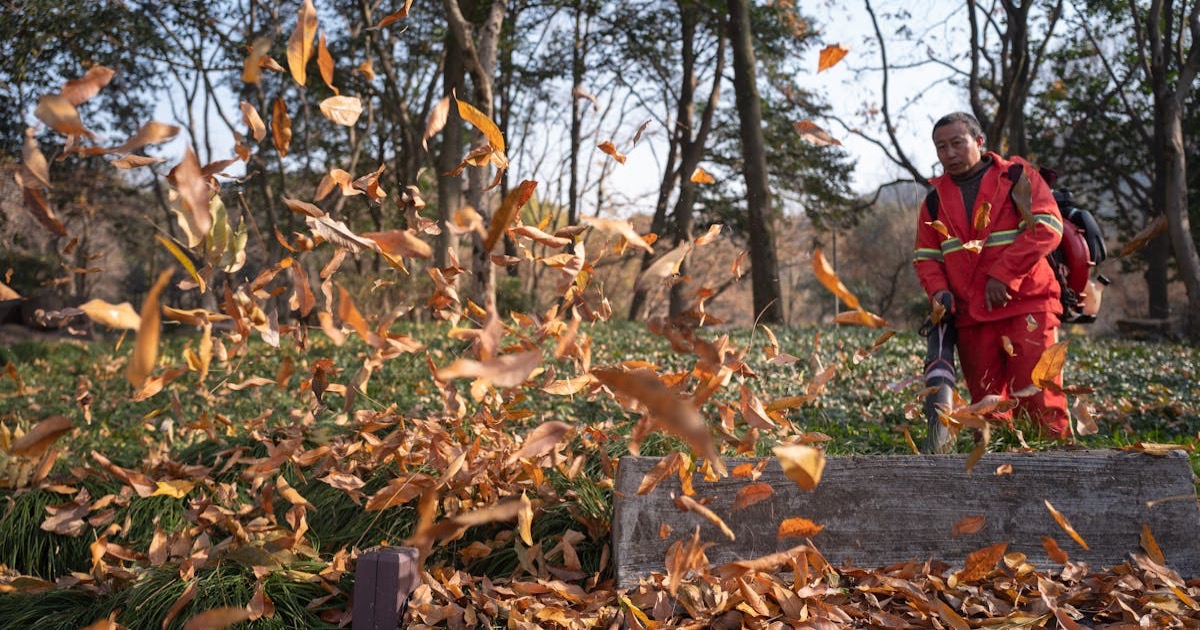
Leaf blower is the fastest option for moving leaves to collection points. Backpack blowers handle large properties efficiently, and the investment ($200-$400 for a quality model) pays for itself in time savings over a few seasons. Blow leaves into piles, then bag them, add them to your compost, or spread them as mulch in garden beds.
Professional service makes sense for properties with heavy tree coverage or large lots. Professional fall cleanup in the Okanagan typically costs around $180 per visit and includes thorough leaf removal from lawns, beds, walkways, and around the foundation.
Do not try to do all your leaf removal in one session. Most Okanagan trees drop their leaves over a 3-4 week period from mid-October to early November. Plan for two or three passes: an early cleanup when the first major leaf fall happens, a main cleanup during peak drop, and a final pass after the last leaves come down.
What to Do With Collected Leaves
Composting: Leaves are an excellent carbon-rich addition to your compost pile. Shred them first for faster decomposition. Mixed with green materials like grass clippings, shredded leaves produce rich compost in 6-12 months.
Garden bed mulch: A 2-3 inch layer of shredded leaves makes excellent winter mulch for garden beds, suppressing weeds and insulating plant roots. Whole leaves tend to mat down, so shred them first.
Municipal collection: Many Okanagan communities offer curbside leaf collection or yard waste drop-off sites. Check your local municipality's schedule and guidelines.
Lawn mulching: As described above, a moderate layer of finely chopped leaves benefits the lawn by returning nutrients and organic matter to the soil.
My Home Plan
Plans starting at $89/mo - all services included
Lawn Winterization: Preparing Your Turf for Cold Weather
The Final Mow
Your last mow of the season is one of the most important cuts of the year. Timing and height both matter.
When: Make your final mow in mid to late October in the Okanagan, before the first hard frost. The grass should have stopped actively growing but still be green. Monitor the forecast and plan your last mow for a dry day when temperatures are above 5 degrees.
Height: Cut to 2-2.5 inches, which is shorter than your typical summer height of 3-3.5 inches. Here is why:
-
Grass left too long (over 3 inches) mats down under snow, creating a suffocating layer that promotes snow mold
-
The folded-over grass blades trap moisture against the crowns, increasing disease risk
-
Long grass provides habitat for voles and mice that damage lawns under snow cover
-
Grass cut too short (under 2 inches) enters winter stressed, with minimal leaf surface for photosynthesis during any warm spells and reduced energy reserves in the root system
The 2-2.5 inch range is the sweet spot: short enough to prevent matting but long enough to protect the crown and maintain adequate root reserves.
Fall Fertilization
If you have not already applied your fall fertilizer (the fourth application in the 4-step program outlined in our fertilization guide), do it in mid to late September. Fall fertilization is the single most important nutrient application of the year.
Use a winterizer fertilizer with higher potassium content, such as a 20-4-12 or 24-2-14 formulation. Apply at 1.0-1.5 pounds of actual nitrogen per 1,000 square feet. This application:
- Builds root mass and carbohydrate reserves for winter survival
- Promotes late-season tillering that thickens the lawn
- Provides potassium that hardens grass cells against freezing temperatures
- Ensures the lawn has adequate nutrient reserves for rapid spring green-up
Overseeding Thin Areas
Fall is the ideal time to overseed thin or bare areas in Okanagan lawns. The soil is still warm from summer, which promotes rapid germination, and the cooler air temperatures reduce stress on young seedlings.
Overseed in early to mid-September to give the new grass at least 6-8 weeks of growing time before freeze-up. By late October, it is too late for fall overseeding in the Okanagan - save it for spring instead.
Choose a seed blend appropriate for your conditions. For most Okanagan properties, a mix of Kentucky bluegrass and perennial ryegrass provides a good balance of durability, drought tolerance, and appearance. For shady areas, add fine fescue to the blend.
Addressing Grub Damage
Fall is when grub damage becomes visible in Okanagan lawns. White grubs (the larvae of June beetles and European chafer beetles) feed on grass roots during late summer and fall, causing patches of lawn that pull up like loose carpet.
If you notice spongy, easily detached sections of turf, peel back a section and look for white C-shaped larvae in the top 2-3 inches of soil. A few grubs per square foot are normal, but more than 5-10 per square foot indicates a problem that needs treatment.
Biological control using nematodes (Heterorhabditis bacteriophora) is the most effective and environmentally responsible treatment for grubs in the Okanagan. Apply nematodes in September when soil temperatures are between 15-25 degrees Celsius and the grubs are still small and vulnerable. Water the lawn thoroughly before and after application.
My Home Plan
Plans starting at $89/mo - all services included
Garden Bed Preparation for Winter
Perennial Cutback and Cleanup
Once the first hard frost has killed back your perennials, it is time to cut them down and clean up the beds. However, not everything should be cut back in fall:
Cut back in fall:
- Hostas (remove completely once leaves yellow and collapse)
- Daylilies (cut to 2-3 inches above ground)
- Peonies (cut to ground level to prevent disease carryover)
- Iris (cut leaves to 4-6 inch fans)
- Most ground covers that have died back
Leave until spring:
- Ornamental grasses (provide winter interest and protect the crown)
- Echinacea and black-eyed Susans (seed heads provide bird food)
- Sedum (dried flower heads add winter texture)
- Any perennial whose identity you are unsure of (wait to see spring growth)
Remove all annual plants completely. Spent annuals left in beds over winter harbor disease and look untidy. Pull them, shake off excess soil, and compost them unless they showed signs of disease.
Mulching Garden Beds
Apply 2-3 inches of mulch over garden beds after perennial cutback. Mulch serves several critical functions during an Okanagan winter:
Root insulation: Mulch moderates soil temperature swings during freeze-thaw cycles. Without mulch, exposed soil can freeze and thaw repeatedly, heaving plant roots out of the ground and killing them through desiccation.
Moisture retention: Mulch prevents the soil from drying out during warm winter days when the sun is strong but the air is dry.
Weed suppression: A fresh mulch layer in fall prevents early spring weed germination, giving your perennials a head start when they emerge.
Erosion prevention: Bare soil in garden beds erodes during fall rains and spring snowmelt, carrying topsoil and nutrients away from plant roots.
Use bark mulch, wood chips, or shredded leaves. Avoid piling mulch directly against plant crowns or tree trunks, which can cause rot and provide hiding spots for rodents.
Planting Fall Bulbs
October is the ideal time to plant spring-blooming bulbs in the Okanagan. Tulips, daffodils, crocuses, hyacinths, and alliums all need a period of cold exposure to bloom, and the Okanagan's cold winters provide exactly that.
Plant bulbs in mid to late October, about 6 weeks before the ground freezes solid. Planting depth is generally 2-3 times the height of the bulb. In the Okanagan's alkaline soils, a small amount of bone meal mixed into the planting hole provides phosphorus for root development.
Tree and Shrub Care for Winter
Pruning Considerations
Fall is generally not the best time for major pruning in the Okanagan. Pruning stimulates new growth, and new growth that emerges before winter does not have time to harden off and will likely suffer cold damage. Save major pruning for late winter (February-March) when trees are fully dormant.
However, there are some fall pruning tasks that are appropriate:
- Remove dead, damaged, or diseased branches from any tree or shrub
- Cut back any branches rubbing against your house, fence, or other structures
- Remove water sprouts (straight vertical shoots) from fruit trees
- Thin out crossing branches that will collect and hold heavy snow loads
Protecting Young and Tender Plants
Young trees and shrubs planted within the last 2-3 years are the most vulnerable to winter damage in the Okanagan. Here is how to protect them:
Trunk wrap: Wrap the trunks of young deciduous trees with commercial tree wrap from ground level to the first branches. This prevents sunscald, which occurs when winter sun warms the bark on the south side during the day, causing cells to become active, and then freezing temperatures at night kill those active cells. The resulting damage appears as vertical cracks or peeling bark in spring.
Burlap screens: Tender evergreens like cedars, boxwoods, and certain rhododendrons benefit from burlap screens on their south and west sides. These screens block winter sun and drying winds, reducing desiccation damage. Do not wrap burlap tightly around the plant - create a screen using stakes that allows air circulation.
Root zone mulch: Apply 3-4 inches of mulch in a wide ring around young trees, extending to the drip line if possible. This insulates roots against deep freezing and reduces frost heaving. Keep mulch 4-6 inches away from the trunk to prevent rot and rodent damage.
Watering: This is commonly overlooked. Give all trees and shrubs, especially evergreens, a deep watering in late October or early November before the ground freezes. Evergreens continue to lose moisture through their needles all winter, and if they enter winter with dry roots, they suffer severe desiccation damage. A deep fall watering can prevent the browning that many Okanagan homeowners see on their cedars and pines in spring.
Deer damage is a significant concern for Okanagan properties near green spaces, orchards, or undeveloped land. Protect vulnerable shrubs and young trees with deer netting or wire cages before snow drives deer into residential areas looking for food. Arborvitae, cedars, yews, and fruit trees are favourite deer browse plants.
My Home Plan
Plans starting at $89/mo - all services included
Irrigation System Winterization
Why Blowout is Non-Negotiable
Winterizing your irrigation system is not optional in the Okanagan. Water left in pipes, fittings, valves, and sprinkler heads will freeze, expand, and crack the components. A single cracked mainline or broken manifold can cost $300-$800 to repair in spring, and frozen backflow preventers typically need complete replacement at $200-$400.
How to Winterize Your Irrigation System
Step 1: Shut off the water supply to the irrigation system at the main shut-off valve, typically located in the basement or mechanical room.
Step 2: Drain the backflow preventer by opening the test cocks and removing any drain plugs. The backflow preventer is the most expensive and vulnerable component - make sure it is completely drained.
Step 3: Blow out the lines using an air compressor with at least 80 PSI capacity. Connect the compressor to the irrigation system's blowout fitting and blow out each zone individually, starting with the zone farthest from the compressor. Run each zone until no more water is visible from any head in that zone.
Step 4: Open all drain valves at low points in the system and leave them open for winter.
Step 5: Remove and store any above-ground components like hose timers, portable sprinklers, and drip irrigation emitters.
Professional irrigation blowout costs $60-$120 in the Okanagan and typically takes 30-60 minutes. Given that a single frozen pipe can cost $300 or more to repair, professional winterization is one of the best values in fall home maintenance. Most irrigation companies offer fall winterization packages that can be scheduled in advance.
Hose and Outdoor Faucet Care
- Disconnect all garden hoses from outdoor faucets. A hose left connected traps water in the faucet and supply line behind it, which can freeze and burst the pipe inside your wall.
- Drain hoses completely, coil them loosely, and store them in a garage or shed.
- If your outdoor faucets have interior shut-off valves, close them and then open the outdoor faucet to drain any remaining water.
- Insulate outdoor faucets with foam covers if they do not have frost-free valves.
Outdoor Furniture and Equipment Storage
Furniture
- Clean all outdoor furniture before storing it. Pressure wash if needed, or wipe down with a mild soap solution.
- Store furniture indoors in a garage, shed, or basement if possible. Okanagan winters are hard on outdoor furniture, even "weather-resistant" pieces.
- If indoor storage is not available, use high-quality waterproof covers and secure them against wind.
- Remove cushions and store them indoors. Outdoor cushion fabric degrades rapidly when exposed to winter moisture and freeze-thaw cycles.
Equipment and Tools
- Drain fuel from gas-powered equipment (mowers, trimmers, blowers) or add fuel stabilizer. Fuel left untreated over winter degrades and can damage carburetors and fuel systems.
- Clean all tools. Remove dirt, grass, and debris from mowers, rakes, shovels, and pruners.
- Sharpen cutting tools: mower blades, pruners, loppers, and hedge shears. Doing this in fall means everything is ready to go when spring arrives.
- Oil metal parts to prevent rust. A light coat of spray lubricant on metal rake tines, shovel blades, and tool heads protects them through the winter.
- Store all equipment and tools in a dry location off the ground.
Fall Yard Cleanup Cost Comparison
DIY Approach
| Task | Time Required | Cost |
|---|---|---|
| Leaf removal (2-3 sessions) | 6-12 hours total | $0-$50 (bags) |
| Final mow and edging | 1-2 hours | $0 (existing equipment) |
| Garden bed cleanup | 2-4 hours | $0-$40 (mulch) |
| Irrigation blowout | 30-60 minutes | $60-$120 (professional recommended) |
| Tree/shrub winterization | 2-3 hours | $20-$60 (wrap, burlap) |
| Equipment storage/maintenance | 2-3 hours | $10-$30 (oil, stabilizer) |
| Total | 14-25 hours | $90-$300 |
Professional Fall Cleanup
| Service | Cost |
|---|---|
| Full fall cleanup (leaves, beds, final mow) | $180 per visit |
| Fall fertilization | $75 |
| Irrigation blowout | $60-$120 |
| Tree/shrub winterization | $100-$200 |
| Total | $415-$575 |
The professional option costs $125-$275 more than DIY but saves you 14-25 hours of physical labor and comes with the expertise to catch issues you might miss - like a slow irrigation leak, early signs of tree disease, or areas of your lawn that need specific treatment.
My Home Plan offers fall cleanup at $180 per visit as part of our home maintenance subscription plans. Starting at $89 per month, our plans can include fall cleanup, fertilization, and year-round lawn care, so your property is always prepared for whatever the Okanagan seasons bring.
A Final Walkthrough Before Winter
Before you consider your fall yard cleanup complete, do one final walkthrough of your entire property. This walkthrough should happen after you have completed all the tasks above and preferably just before the first sustained freeze.
Check your checklist:
- All leaves removed from lawn, walkways, and drainage areas
- Lawn mowed to 2-2.5 inches and looking clean
- Garden beds cut back, cleaned, and mulched
- Young trees wrapped and mulched
- Irrigation system fully drained and blown out
- All hoses disconnected and stored
- Outdoor faucets protected
- Furniture cleaned and stored or covered
- Equipment maintained and stored
- Gutters and downspouts cleared (leaves clog these quickly in fall)
- Drainage paths clear and functional
This walkthrough takes 15-20 minutes and gives you peace of mind that your property is fully prepared for whatever the Okanagan winter delivers. When spring arrives, you will be glad you invested the time in fall to set yourself up for an easy, productive start to the new growing season.
Ready to simplify your home maintenance?
Get all your home services in one monthly plan. Vetted contractors, guaranteed scheduling, predictable pricing.
Frequently Asked Questions
Why Homeowners Choose My Home Plan
Predictable Pricing
One monthly payment covers everything. No surprise quotes or hidden fees.
Vetted Contractors
Every contractor is background-checked, insured, and reviewed.
Zero Hassle
We handle scheduling, quality control, and follow-ups. You relax.
Related Articles
DIY Lawn Care vs. Professional Service: The Real Cost Comparison
Most homeowners assume DIY lawn care saves money. But when you add up equipment, products, maintenance, and - most importantly - your time, the numbers tell a different story. Here is the full cost breakdown.
The Complete Lawn Fertilization Schedule for BC Homeowners
A properly timed lawn fertilization schedule is the difference between a lawn that survives and one that thrives. This guide lays out the exact 4-step fertilization program designed for BC's Interior climate.
How Often Should You Mow Your Lawn in the Okanagan? A Seasonal Guide
Figuring out the right lawn mowing frequency in the Okanagan can save you time, money, and a lot of frustration. This guide breaks down exactly how often to cut your grass through every season in BC's Interior.