The Complete Lawn Fertilization Schedule for BC Homeowners
Master your lawn fertilization schedule with this BC-specific guide. Learn the 4-step program, organic vs synthetic options, and seasonal timing for Okanagan lawns.
Why Your Lawn Fertilization Schedule Matters in the Okanagan
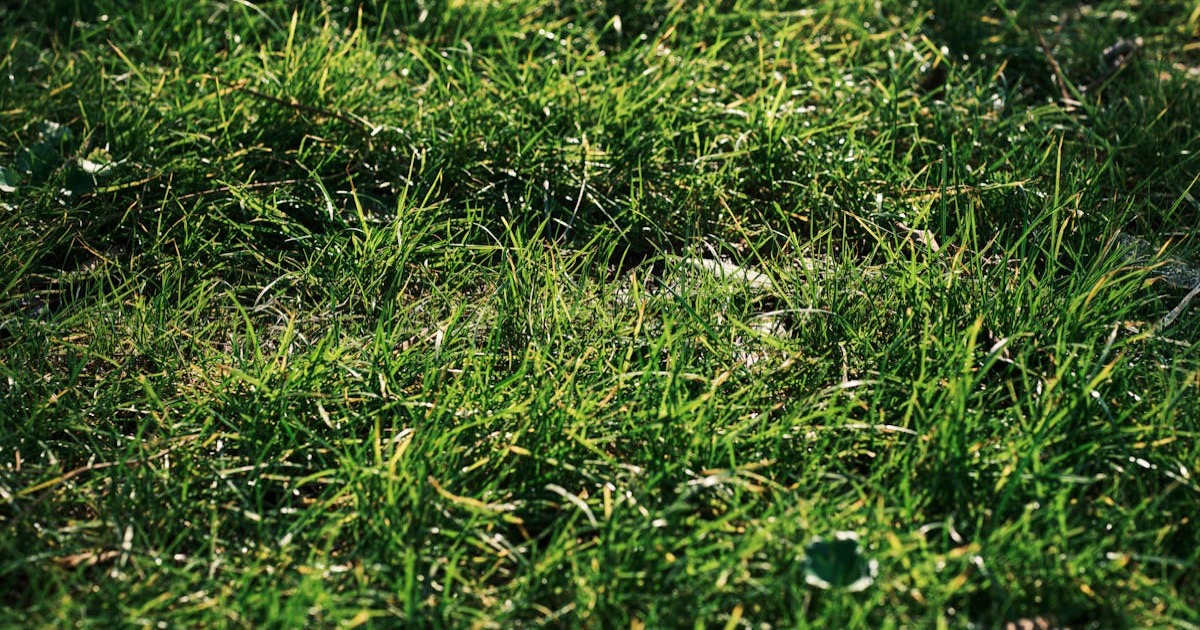
A well-timed lawn fertilization schedule is the foundation of a thick, green, weed-resistant lawn. In the Okanagan Valley, where hot summers, cold winters, and semi-arid conditions put constant stress on your turf, proper fertilization is not a luxury - it is a necessity.
Most homeowners in Kelowna, Penticton, Vernon, and the surrounding communities either fertilize at the wrong time, use the wrong products, or skip fertilization entirely. The result is a lawn that looks acceptable in May, struggles through July, and limps into fall looking thin, patchy, and full of weeds.
The reality is that grass is a hungry plant. Your lawn contains thousands of individual grass plants per square foot, all competing for the same nutrients in the soil. Without regular fertilization, those nutrients are depleted within a single growing season. The grass thins, weeds move in, and you are left fighting a losing battle.
This guide provides a complete, step-by-step lawn fertilization schedule designed specifically for BC homeowners in the Okanagan and Interior regions. We will cover when to fertilize, what products to use, how to apply them correctly, and the critical mistakes that waste money and damage lawns.
Understanding Fertilizer Numbers: N-P-K Explained
Before diving into the schedule, you need to understand what the three numbers on every fertilizer bag mean. These numbers represent the percentage by weight of three essential nutrients:
Nitrogen (N) - The First Number: Nitrogen drives green, leafy growth. It is the nutrient your lawn consumes the most and the one most likely to be deficient in Okanagan soils. A fertilizer labeled 24-4-8 contains 24 percent nitrogen.
Phosphorus (P) - The Second Number: Phosphorus supports root development and is critical when establishing new lawns or overseeding. Mature lawns in the Okanagan generally need less phosphorus because our soils tend to have adequate levels naturally.
Potassium (K) - The Third Number: Potassium strengthens cell walls, improves drought tolerance, and helps grass survive winter stress. This is a particularly important nutrient for Okanagan lawns because our extreme temperature swings demand resilient turf.
Different seasons call for different N-P-K ratios, which is why a proper lawn fertilization schedule uses different products for each application rather than applying the same formula year-round.
A 50-pound bag of 24-4-8 fertilizer contains 12 pounds of nitrogen, 2 pounds of phosphorus, and 4 pounds of potassium. The remaining 32 pounds is filler material that helps distribute the nutrients evenly across your lawn.
Step 1: Soil Testing - The Starting Point Most Homeowners Skip
The most effective lawn fertilization program starts with a soil test. Without knowing what is already in your soil, you are guessing - and guessing often leads to over-applying some nutrients and under-applying others.
Why Soil Testing Matters in the Okanagan
Okanagan soils vary dramatically across short distances. A property in Kelowna's Mission area might have sandy, fast-draining soil with low organic matter, while a yard in Glenmore sits on heavier clay. Vernon properties near Kalamalka Lake have different soil chemistry than those in Coldstream. Each soil type has different nutrient profiles and different fertilization needs.
A basic soil test will tell you:
- Current pH level (Okanagan soils tend to be slightly alkaline, between 7.0 and 8.0)
- Existing nitrogen, phosphorus, and potassium levels
- Micronutrient levels including iron, manganese, and sulfur
- Organic matter content
- Soil texture classification
How to Get Your Soil Tested
You can collect soil samples yourself and send them to a testing laboratory. In British Columbia, several labs offer residential soil testing for $30-$60 per sample. Collect samples from 4-6 spots around your lawn, mix them together, and submit the blended sample.
The test results will include specific fertilizer recommendations for your soil type and conditions. This takes the guesswork out of your lawn fertilization schedule and ensures you are applying exactly what your lawn needs.
Test your soil every 2-3 years. Soil chemistry changes over time based on your fertilization practices, irrigation water chemistry, and natural weathering. Retesting ensures your fertilization program stays calibrated to your lawn's actual needs.
Lawn Fertilization & Weed Control
Starting at $70/visit - included in your plan
The 4-Step Lawn Fertilization Program for the Okanagan
Application 1: Early Spring Kickstart (Mid-April to Early May)
Timing: Apply when soil temperatures reach 10 degrees Celsius and the grass has been actively growing for 2-3 weeks. In most Okanagan locations, this falls between April 15 and May 5.
Product: A balanced fertilizer with slow-release nitrogen, such as a 20-5-10 or 22-4-8 formulation. Look for products where at least 50 percent of the nitrogen is slow-release (often labeled as "controlled release," "polymer-coated," or "sulfur-coated urea").
Purpose: This application feeds the lawn during its first major growth period and replenishes nutrients depleted over winter. The goal is to support strong root and shoot growth as the grass breaks dormancy and starts filling in.
Application Rate: Follow the product label, but the general target is 0.75-1.0 pound of actual nitrogen per 1,000 square feet. For a 24-4-8 fertilizer, that means roughly 3-4 pounds of product per 1,000 square feet.
Pre-Emergent Weed Control: This first application is the ideal time to include a pre-emergent herbicide to prevent crabgrass and other annual weeds. Pre-emergent herbicides work by creating a barrier in the top layer of soil that prevents weed seeds from germinating. Timing is critical - you need to apply before soil temperatures reach 12-14 degrees Celsius, which is when crabgrass seeds begin to germinate.
Many combination "weed and feed" products include both fertilizer and pre-emergent herbicide. These are convenient, but make sure the timing works for both components. If you need to apply pre-emergent early but the grass is not ready for fertilizer yet, use the pre-emergent alone and fertilize later.
Application 2: Late Spring Boost (Late May to Mid-June)
Timing: Apply 6-8 weeks after your first application, typically between May 25 and June 15.
Product: A higher nitrogen fertilizer designed for active growth, such as a 28-3-6 or 30-0-4 formulation. Continue using slow-release nitrogen products to provide steady feeding over weeks rather than a quick burst.
Purpose: This is the power-feeding application. Your lawn is in peak growth mode, the root system is fully active, and the grass can absorb and use large amounts of nitrogen. This application builds the dense turf canopy that will help your lawn survive summer heat.
Application Rate: 0.75-1.0 pound of actual nitrogen per 1,000 square feet.
Broadleaf Weed Control: If dandelions, clover, or other broadleaf weeds are present, this is an excellent time to apply a broadleaf herbicide. Post-emergent broadleaf herbicides work best when weeds are actively growing, which they certainly are in late May and June. You can use a combination product that includes fertilizer and broadleaf weed control, or apply them separately.
When applying broadleaf herbicide, do not mow for 48 hours before or after application. The herbicide needs leaf surface area to be absorbed, and mowing removes the leaves where the product lands. Also avoid applying within 24 hours of rain or irrigation.
Application 3: Summer Stress Relief (Mid-July to Early August)
Timing: Apply between July 15 and August 5, depending on weather conditions.
Product: A light fertilizer with an emphasis on potassium for stress resistance. Look for formulations like 12-0-12 or 15-0-15. Some lawn care professionals use iron-based fertilizers during this period, which green up the lawn without pushing excessive growth during heat stress.
Purpose: This application is not about driving growth - it is about keeping the lawn alive and healthy through the most stressful period of the year. The potassium strengthens cell walls and improves the grass's ability to manage heat and drought stress. Excessive nitrogen during this period forces growth that the grass cannot sustain, leading to more stress rather than less.
Application Rate: 0.5-0.75 pounds of actual nitrogen per 1,000 square feet. This is deliberately lighter than the spring applications because you do not want to push growth during heat stress.
Iron Supplement: An iron application during summer can dramatically improve your lawn's color without the risks of heavy nitrogen feeding. Chelated iron products green up the grass within days and have the added benefit of darkening the turf, which looks lush and healthy even during Okanagan heat waves.
Important Considerations for Summer Fertilization:
- Water the lawn thoroughly before and after applying fertilizer
- Apply in the early morning or evening when temperatures are below 25 degrees
- If the lawn is dormant and brown from heat stress, delay this application until it recovers
- Avoid applying granular fertilizer to wet grass in hot conditions, as this dramatically increases the risk of fertilizer burn
Lawn Fertilization & Weed Control
Starting at $70/visit - included in your plan
Application 4: Fall Foundation (Mid-September to Mid-October)
Timing: Apply between September 15 and October 15. This is widely considered the most important fertilizer application of the year.
Product: A fall-specific or "winterizer" fertilizer with higher potassium content, such as a 20-4-12 or 24-2-14 formulation. Some fall fertilizers also include sulfur to help lower the pH of Okanagan's naturally alkaline soils.
Purpose: The fall application builds the lawn's reserves for winter survival and spring emergence. During fall, grass shifts its energy from top growth to root development and carbohydrate storage. The nitrogen supports late-season growth and tillering that thickens the lawn, while the potassium hardens the grass cells against freezing temperatures.
Application Rate: 1.0-1.5 pounds of actual nitrogen per 1,000 square feet. This is the heaviest application of the year because the grass is actively storing nutrients and building root reserves.
Why Fall Fertilization is the Most Important Application:
Many Okanagan homeowners focus all their fertilization energy on spring, trying to get the lawn green as fast as possible. But turf science research consistently shows that the fall application has the single greatest impact on overall lawn health. Here is why:
- Roots are growing actively in fall, building the root mass that supports the entire plant
- Carbohydrates stored in fall determine how quickly and vigorously the lawn greens up the following spring
- Dense fall growth crowds out weed seeds, reducing next year's weed population
- Potassium applied in fall improves winter hardiness and reduces cold damage
A lawn that receives a proper fall fertilization will green up faster in spring, resist disease better, and maintain color longer through summer than a lawn that only receives spring feeding.
If you can only fertilize your Okanagan lawn once a year, make it the fall application. It will do more for your lawn's long-term health than any other single treatment.
Organic vs. Synthetic Fertilizers: Which is Right for Okanagan Lawns?
Synthetic Fertilizers
Advantages:
- Precise nutrient ratios you can match to soil test results
- Fast-acting formulations available for quick green-up
- Lower cost per unit of nutrient
- Easier to find in local garden centres
- Consistent results when applied correctly
Disadvantages:
- Higher burn risk if over-applied or applied in hot, dry conditions
- Can contribute to salt buildup in Okanagan's already mineral-rich soils
- Does not improve soil structure or microbiology
- Nutrients can leach through sandy Okanagan soils before roots absorb them
Organic Fertilizers
Advantages:
- Very low burn risk even if slightly over-applied
- Improves soil biology by feeding beneficial microorganisms
- Builds organic matter over time, improving water retention in sandy Okanagan soils
- Releases nutrients slowly, matching the grass's natural uptake patterns
- Reduces environmental impact on Okanagan Lake and other waterways
Disadvantages:
- Higher cost per unit of nutrient
- Slower results; visible green-up takes 2-4 weeks instead of days
- Less precise nutrient ratios
- Larger application volumes needed
- Some products have strong odors for 24-48 hours after application
The Hybrid Approach
Many professional lawn care services in the Okanagan use a hybrid approach: organic-based fertilizers for the foundation of the program supplemented with synthetic products for targeted nutrient delivery. For example, an organic compost topdressing in spring combined with a synthetic fall winterizer gives you the soil-building benefits of organics and the precise nutrient delivery of synthetics.
This approach is particularly well-suited to the Okanagan because our soils generally have low organic matter content. Building organic matter through organic fertilizers and compost improves water retention, which is critical in a region where irrigation is essential and water costs are significant.
Lawn Fertilization & Weed Control
Starting at $70/visit - included in your plan
Weed Prevention Through Proper Fertilization
One of the most overlooked benefits of a proper lawn fertilization schedule is its impact on weed populations. A thick, well-fed lawn is the single best defence against weeds. Here is how fertilization and weed control work together:
How Fertilization Prevents Weeds
Weeds are opportunists. They colonize thin spots, bare patches, and weak areas where the grass cannot compete. When you maintain a consistent fertilization schedule, the grass grows thick and dense, physically crowding out weed seedlings before they can establish.
A properly fertilized Kentucky bluegrass lawn can produce 6-8 plants per square inch. At that density, there is simply no room for weeds to gain a foothold. This is why homeowners who skip fertilization often find themselves spending more money on herbicides than they would have spent on fertilizer.
Integrating Weed Control Into Your Fertilization Schedule
Pre-Emergent Herbicides (Application 1): Target annual weeds like crabgrass, foxtail, and annual bluegrass before they germinate. Timing is everything - apply before soil temperatures hit 12-14 degrees Celsius.
Post-Emergent Broadleaf Control (Application 2): Target established dandelions, clover, plantain, and other broadleaf weeds during their active growth period. Products containing 2,4-D, dicamba, or triclopyr are effective but must be applied carefully to avoid damaging desirable plants nearby.
Spot Treatment (Ongoing): Rather than blanket-spraying your entire lawn, spot-treat individual weeds as they appear. This reduces chemical use, costs less, and is more environmentally responsible - an important consideration in the Okanagan where watershed health directly impacts lake quality.
Common Fertilization Mistakes That Damage Okanagan Lawns
Mistake 1: Fertilizing Too Early in Spring
Applying fertilizer before the grass is actively growing wastes product and can actually encourage weeds. Weed seeds germinate at lower temperatures than grass, so early fertilization feeds weeds instead of your lawn. Wait until the grass has been mowed at least twice before your first fertilization.
Mistake 2: Over-Applying Nitrogen
More is not better when it comes to nitrogen. Excessive nitrogen produces rapid, weak growth that is susceptible to disease, insect damage, and heat stress. It also forces more frequent mowing and increases water demand. Stick to the recommended rates for each seasonal application.
Mistake 3: Fertilizing During Drought Stress
Applying fertilizer to a drought-stressed, dormant lawn is like force-feeding a sick person. The grass cannot absorb nutrients when it is in survival mode. If your lawn is brown and dormant in August, skip the summer application and wait for fall recovery.
Mistake 4: Ignoring Soil pH
Okanagan soils are typically alkaline, with pH levels between 7.0 and 8.0. At high pH levels, iron and manganese become unavailable to the grass even if they are present in the soil. This causes chlorosis - yellowing of the leaves despite adequate fertilization. If your soil pH is above 7.5, consider applications of sulfur or iron sulfate to lower it gradually.
Mistake 5: Applying Granular Fertilizer to Wet Grass in Hot Weather
This is the fastest way to burn your lawn. Granular fertilizer stuck to wet grass blades concentrates nutrients in small areas, creating chemical burns. Always apply granular fertilizer to dry grass, or water it in immediately after application to wash granules off the blades and into the soil.
Professional Fertilization vs. DIY: What to Consider
A do-it-yourself fertilization program for an average Okanagan lawn (3,000-5,000 square feet) costs roughly $150-$250 per year in products alone. Add a spreader ($60-$200), soil test ($30-$60), herbicide products ($40-$80), and your time for four applications (4-6 hours total), and the annual investment is $280-$590.
Professional lawn fertilization in the Okanagan typically costs about $75 per visit. For a four-application program, that is $300 per year. The professional service includes:
- Soil analysis and customized product selection
- Commercial-grade products not available at retail stores
- Precise application with calibrated equipment
- Integrated weed control
- Seasonal adjustments based on weather and lawn condition
- Expert monitoring for disease, insects, and nutrient deficiencies
When you compare the all-in costs, professional fertilization often comes in at a similar price point to DIY while delivering better results with zero time investment from you.
My Home Plan includes lawn fertilization at $75 per visit as part of our home maintenance subscription plans. Starting at $89 per month, our plans bundle fertilization with mowing, seasonal cleanups, and other home maintenance services so you never have to think about your lawn care schedule again.
Month-by-Month Fertilization Calendar for the Okanagan
| Month | Action | Product Type | Notes |
|---|---|---|---|
| March | Soil test if needed | N/A | Send samples to lab, plan season |
| April | Application 1 | 20-5-10 + pre-emergent | Wait for active growth, soil temp 10C+ |
| May | Monitor weed emergence | Spot treat as needed | Track how lawn responds to first app |
| June | Application 2 | 28-3-6 + broadleaf control | Power feed during peak growth |
| July | Application 3 | 12-0-12 + iron | Light feeding, stress relief |
| August | Monitor for stress | Iron supplement only if needed | Skip if lawn is dormant |
| September | Application 4 | 20-4-12 winterizer | Most important application of the year |
| October | Final assessment | N/A | Note areas for overseeding next spring |
| November-February | Off-season | N/A | Plan next year's program |
Building Long-Term Soil Health in the Okanagan
A lawn fertilization schedule is most effective when it is part of a broader soil health strategy. In the Okanagan, where soils are naturally low in organic matter and tend toward alkalinity, building soil health over time pays enormous dividends.
Annual Compost Topdressing: Apply a quarter-inch layer of fine compost over the lawn in early spring or fall. This adds organic matter, introduces beneficial microorganisms, and improves water retention. Over three to five years of annual topdressing, you will notice dramatic improvements in soil structure and lawn health.
Aeration: Core aeration once or twice a year (spring and fall) relieves soil compaction, improves root penetration, and allows fertilizer and water to reach the root zone more effectively. Okanagan soils, particularly the clay-heavy soils common in parts of Kelowna and Vernon, compact easily and benefit greatly from regular aeration.
Grasscycling: Leaving grass clippings on the lawn after mowing returns nitrogen and organic matter to the soil. Over a full growing season, grasscycling can contribute the equivalent of one full fertilizer application.
These practices compound over time. A lawn that has been properly fertilized, aerated, and topdressed for three years will outperform a newly fertilized lawn dramatically - it will be thicker, greener, more drought-tolerant, and nearly weed-free.
Ready to simplify your home maintenance?
Get all your home services in one monthly plan. Vetted contractors, guaranteed scheduling, predictable pricing.
Frequently Asked Questions
Why Homeowners Choose My Home Plan
Predictable Pricing
One monthly payment covers everything. No surprise quotes or hidden fees.
Vetted Contractors
Every contractor is background-checked, insured, and reviewed.
Zero Hassle
We handle scheduling, quality control, and follow-ups. You relax.
Related Articles
DIY Lawn Care vs. Professional Service: The Real Cost Comparison
Most homeowners assume DIY lawn care saves money. But when you add up equipment, products, maintenance, and - most importantly - your time, the numbers tell a different story. Here is the full cost breakdown.
Fall Yard Cleanup Guide: How to Winterize Your Okanagan Property
The work you do in fall determines whether your Okanagan property emerges from winter in good shape or needs expensive repairs come spring. This guide covers every step of fall yard cleanup and winterization.
How Often Should You Mow Your Lawn in the Okanagan? A Seasonal Guide
Figuring out the right lawn mowing frequency in the Okanagan can save you time, money, and a lot of frustration. This guide breaks down exactly how often to cut your grass through every season in BC's Interior.