How to Get Rid of Ants in Your Home: The Complete Homeowner's Guide
Learn how to get rid of ants in your home for good. Expert guide covering species ID, natural remedies, bait stations, entry point sealing, and professional tips.
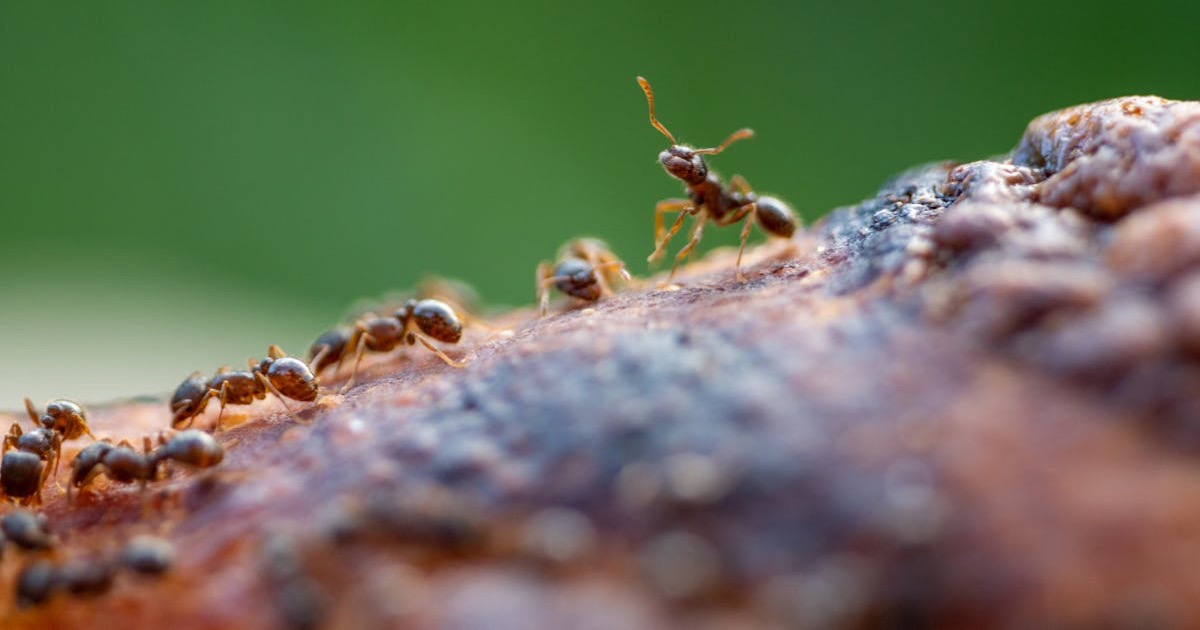
You walk into your kitchen one morning and there they are - a line of ants marching across your countertop, disappearing behind the backsplash. You wipe them away, spray some cleaner, and think the problem is solved. The next morning, they are back. Maybe more of them this time.
This scenario plays out in thousands of homes across the Okanagan every spring and summer. Ants are the single most common pest complaint from homeowners in Kelowna, West Kelowna, Penticton, Vernon, and the surrounding communities. And the reason most people struggle to get rid of them is that they are treating the symptom (visible ants) rather than the cause (the colony).
This guide will walk you through everything you need to know to get rid of ants effectively and keep them from coming back.
Why Killing Visible Ants Does Not Work
Here is the most important thing to understand about ant control: the ants you see represent roughly 10% of the colony. The other 90% - including the queen, larvae, and the bulk of the worker population - are hidden in the nest, which could be underground in your yard, inside your walls, or beneath your foundation.
When you spray or squish the ants on your counter, you are eliminating foragers. The colony registers the loss and simply sends more. In some species, killing foragers near the nest can actually trigger a stress response that causes the colony to "bud" - splitting into multiple satellite colonies, making the problem worse.
Effective ant control requires a strategy that reaches the colony itself.
Avoid using spray insecticides on ant trails inside your home. Sprays kill on contact but repel other ants from the treated area, causing them to find new entry points and potentially split into multiple colonies. This makes the infestation harder to eliminate.
Step 1: Identify the Species
Not all ants are created equal, and the species you are dealing with determines the correct treatment approach. In the Okanagan, the most common household ant species are:
Carpenter Ants
Size: 6-13mm (the largest ants you will encounter indoors)
Colour: Usually solid black, sometimes black with a dark reddish-brown midsection
Behaviour: Primarily nocturnal. You are more likely to see them in the evening or at night. They do not eat wood but excavate it to create nesting galleries.
Key Indicator: Frass - small piles of fine, sawdust-like wood shavings, often mixed with dead ant parts. You might find frass along baseboards, below window sills, near door frames, or in basement/crawl space areas.
Nesting Preference: Moisture-damaged wood. Carpenter ants almost always establish their primary nest in wood that has been softened by water damage, fungal decay, or prolonged moisture exposure. Common sites include leaking window frames, roof decking near ice dam areas, deck ledger boards, and wood in contact with soil.
Risk Level: High. Carpenter ant damage is structural and progressive. A mature colony can cause thousands of dollars in damage if left untreated.
Pavement Ants
Size: 2.5-3mm (very small)
Colour: Dark brown to black
Behaviour: Active during the day. Create visible trails along edges - baseboards, countertop edges, window sills. Very attracted to sweet and greasy foods.
Key Indicator: Small mounds of displaced soil along sidewalks, driveway cracks, patio edges, and foundation walls.
Nesting Preference: Underground, typically beneath pavement, concrete slabs, patios, and foundations. They enter homes through cracks in the foundation and gaps around plumbing and utility penetrations.
Risk Level: Low structural risk, but they contaminate food and are extremely persistent once established.
Odorous House Ants
Size: 2.5-3mm (similar to pavement ants)
Colour: Dark brown to black
Behaviour: When crushed, they emit a distinctive rotten coconut odour. They form large colonies with multiple queens and are highly adaptable.
Key Indicator: The smell when crushed, and their tendency to form very long trailing lines.
Nesting Preference: Flexible - they nest under rocks, mulch, and debris outdoors, and inside wall voids, under floors, and near heat sources indoors.
Risk Level: Low structural risk, but colonies can grow very large (up to 100,000 workers) and are difficult to eliminate due to multiple queens.
Pest Control
Starting at $125/visit - included in your plan
Step 2: Find and Seal Entry Points
Before you focus on eliminating the colony, you need to understand how ants are getting inside. Follow the ant trail backward from where you see them to identify the entry point. Common entry points include:
- Foundation cracks: Even hairline cracks in concrete foundations provide access for small ant species
- Gaps around plumbing penetrations: Where pipes enter the home through walls or floors
- Window and door frames: Gaps in caulking, worn weatherstripping, and gaps between frames and siding
- Utility entrances: Where electrical, cable, gas, and water lines enter the building
- Sill plate gaps: The junction where the wood framing meets the foundation is a common entry point
- Expansion joints: Gaps in concrete slabs, patios, and garage floors
- Weep holes: In brick veneer construction, weep holes at the base of the brick provide direct access
How to Seal Entry Points Effectively
Use the right sealant for the right situation:
- Silicone caulk for gaps around window and door frames, plumbing penetrations, and utility entrances
- Expanding foam for larger gaps in wall cavities and around pipe chases (use the low-expansion type to avoid warping frames)
- Steel wool plus caulk for gaps that also need to exclude rodents
- Concrete patch for cracks in foundations and slab floors
- Copper mesh for weep holes (maintains airflow while blocking pests)
When sealing entry points, work from the outside in. Start with the exterior foundation and work up to soffits, then address interior gaps. This "outside-first" approach creates the primary barrier where it matters most.
Sealing entry points is essential, but understand that it alone will not solve an active infestation. Ants are remarkably persistent and will find alternative routes. Entry point sealing works best as a prevention measure combined with colony elimination.
Step 3: Eliminate Food and Water Sources
Ants are inside your home for two reasons: food and water (and in the case of carpenter ants, nesting sites in moist wood). Removing what attracts them forces colonies to look elsewhere.
Kitchen discipline:
- Wipe down all countertops, stovetops, and tables after every meal
- Sweep or vacuum floors daily, especially under and behind appliances
- Store all food in sealed glass or plastic containers - ants can chew through paper and thin plastic bags
- Empty and clean pet food bowls after feeding (pet food is a major ant attractant)
- Take out garbage daily and use bins with tight-fitting lids
- Clean the inside of your dishwasher door seal - food residue accumulates here
- Address sticky residue on jars, bottles, and shelves in your pantry
Moisture management:
- Fix dripping taps and leaky pipes immediately
- Ensure bathroom exhaust fans are functional and used during showers
- Address condensation on windows and pipes
- Repair any water-damaged wood (this is critical for carpenter ant prevention)
- Ensure proper drainage away from your foundation
Outdoor factors:
- Move compost bins away from the house
- Clean up fallen fruit from trees
- Remove or relocate honeydew-producing plants near the foundation (aphid-infested plants attract ants that farm the aphids)
- Keep garbage and recycling bins clean and sealed
Step 4: Use the Right Bait Strategy
Baiting is the most effective DIY method for eliminating ant colonies because it exploits the ants' own behaviour against them. Worker ants find the bait, consume some, and carry the rest back to share with the colony, including the queen. When the queen dies, the colony collapses.
Choosing the Right Bait
Different ant species prefer different foods at different times, so the right bait matters:
For sweet-feeding ants (pavement ants, odorous house ants in spring/summer): Liquid or gel baits containing borax or a slow-acting insecticide like fipronil. Commercial products like Terro liquid ant bait or Advion ant gel are effective. The key is a low concentration of active ingredient (around 1% or less) so that workers survive long enough to carry the bait back to the nest.
For protein/grease-feeding ants (pavement ants in fall, some species year-round): Protein-based granular baits. If ants are ignoring your sweet bait, try switching to a protein-based option.
For carpenter ants: Gel baits placed along known trailing routes, particularly near moisture sources and along the edges of walls and windows where carpenter ants travel at night. Carpenter ants are often more responsive to sweet baits in spring and protein baits in summer.
Bait Placement Tips
- Place bait directly on or immediately adjacent to active ant trails - never between the trail and the food source
- Do not clean up the ant trail before placing bait. The pheromone trail is what brings ants to the bait
- Use multiple small bait placements rather than one large one
- Do not use spray insecticides anywhere near bait placements - the repellent effect will keep ants away from the bait
- Be patient. Baiting takes 3-14 days to eliminate a colony. You may initially see more ants as they recruit workers to the bait source. This is a good sign
- Replace bait that dries out or is fully consumed
Pest Control
Starting at $125/visit - included in your plan
Step 5: Natural and Low-Toxicity Options
If you prefer to avoid chemical pesticides, several natural approaches can help manage ant problems, though they are generally better as supplements to baiting rather than standalone solutions.
Diatomaceous Earth (DE)
Food-grade diatomaceous earth is a fine powder made from fossilized diatoms. It works by damaging the waxy coating on the ant's exoskeleton, causing dehydration and death. Apply a thin line of DE across entry points and along baseboards in dry areas.
Pros: Non-toxic to humans and pets, long-lasting in dry conditions Cons: Ineffective when wet, takes 24-48 hours to kill, does not reach the colony
Vinegar Solution
A 50/50 mixture of white vinegar and water sprayed along ant trails disrupts the pheromone trail, temporarily confusing foragers.
Pros: Completely non-toxic, readily available Cons: Temporary - pheromone trails are re-established quickly, does not kill ants or affect the colony
Peppermint Oil
Mix 10-15 drops of peppermint essential oil with water in a spray bottle and apply around entry points. Ants avoid the strong scent.
Pros: Pleasant smell, non-toxic Cons: Needs frequent reapplication, only works as a deterrent near application points
Borax and Sugar Bait (DIY)
Mix 1 tablespoon of borax with 1/2 cup of sugar and 1.5 cups of warm water. Soak cotton balls in the solution and place them on small pieces of wax paper along ant trails.
Pros: Inexpensive, effective as a bait (borax is slow-acting enough that ants carry it back to the colony) Cons: Keep away from children and pets, requires monitoring and replacement
The most effective natural approach combines multiple methods: seal entry points with caulk, use diatomaceous earth as a barrier in dry areas like crawl spaces and attics, and use a borax-sugar bait along active trails. This layered approach addresses both immediate foragers and the underlying colony.
When to Call a Professional
DIY ant control works well for minor infestations of pavement ants or odorous house ants that have clear, accessible entry points. However, some situations require professional intervention:
Carpenter Ant Infestations
If you are finding frass (sawdust piles), hearing faint rustling sounds inside walls, or seeing large black ants regularly inside your home - especially at night - you likely have a carpenter ant colony nesting in your structure. Professional treatment is strongly recommended because:
- The nest may be deep inside a wall cavity, roof structure, or subfloor where DIY baits cannot reach
- Carpenter ants often establish satellite colonies, and all must be located and treated
- Structural damage needs to be assessed and the moisture source that attracted them must be identified and corrected
- Professional technicians use non-repellent transfer insecticides that workers carry back to the nest, achieving colony elimination that baits alone may not accomplish
Recurring Infestations
If you have sealed entry points, eliminated food sources, and used baits but ants keep returning season after season, the colony (or multiple colonies) may be well-established in locations you cannot access. Professional treatment with commercial-grade products applied to the exterior perimeter creates a barrier that prevents re-entry.
Multi-Species Infestations
If you are seeing different sizes and types of ants in different areas of your home, you may be dealing with multiple species and colonies simultaneously. A professional can identify each species and apply the appropriate treatment for each.
Large-Scale Kitchen or Bathroom Invasions
When hundreds of ants appear in a short period, particularly emerging from wall voids or around plumbing, the colony is likely nesting close to or inside the structure. This level of infestation rarely resolves with DIY methods alone.
Pest Control
Starting at $125/visit - included in your plan
The Carpenter Ant Problem in the Okanagan
Carpenter ants deserve special attention because they are both extremely common in the Okanagan and potentially destructive. The region's climate - with freeze-thaw cycles that create ice dams and moisture intrusion, combined with the prevalence of wood-frame construction and mature trees - creates ideal conditions for carpenter ant infestations.
How Carpenter Ants Establish in Your Home
The typical progression looks like this:
-
A moisture problem develops. A slow roof leak, ice dam damage, a plumbing leak in a wall, condensation in a crawl space, or wood siding in contact with soil begins to soften the wood through moisture and fungal decay.
-
A parent colony in a nearby tree or stump sends out foragers. Carpenter ants have a foraging range of up to 100 metres. If your home is near mature trees - as most Okanagan homes are - foragers will eventually find the moisture-damaged wood.
-
A satellite colony is established. Workers begin excavating the softened wood, creating smooth-walled galleries for the colony. Unlike the parent colony (which contains the primary queen and requires constant moisture), satellite colonies can exist in drier wood once established.
-
The colony grows. Over 2-5 years, the satellite colony can grow to thousands of workers, expanding its galleries through structural timbers, potentially compromising the integrity of framing members.
Signs of Carpenter Ant Activity
- Frass deposits: Fine wood shavings, often mixed with dead ant body parts, appearing along baseboards, on window sills, or on horizontal surfaces below wall areas
- Rustling sounds: A faint crinkling or rustling noise inside walls, especially noticeable at night when the house is quiet
- Winged swarmers: Large winged ants (up to 20mm) emerging inside the home in spring indicate a mature colony has been present for at least 3-5 years
- Trailing workers: Large black ants seen consistently on the same paths, particularly at night, along edges of walls, counters, and window frames
- Structural softness: Wood that feels spongy or hollow when probed, especially around windows, door frames, and where walls meet the foundation
What Professional Carpenter Ant Treatment Involves
A thorough carpenter ant treatment includes:
- Inspection: Identifying the satellite colony location(s) inside the structure, the parent colony outside, and the moisture source that attracted them
- Treatment: Application of non-repellent insecticides (typically fipronil or chlorfenapyr) to colony sites and foraging trails, plus targeted injection into wall voids
- Exclusion: Sealing entry points and trimming vegetation contact points
- Moisture remediation: Identifying and recommending repairs for the underlying moisture problem
- Follow-up: Monitoring to confirm colony elimination and checking for additional satellite colonies
Prevention: The Long-Term Strategy
Getting rid of an active ant infestation is only half the battle. Without ongoing prevention, new colonies will eventually find their way in - especially in the Okanagan where ant populations are dense and active for most of the year.
Monthly maintenance tasks:
- Walk your home's perimeter and check for new ant trails, soil mounds, and gaps in caulking
- Inspect under sinks and around plumbing for moisture and ant activity
- Check window sills and door frames for frass or signs of carpenter ant activity
- Maintain a vegetation-free zone of at least 15cm along your foundation
Seasonal tasks:
- Spring: Inspect and re-caulk exterior gaps before ant season begins. Check for overwintering carpenter ant activity
- Summer: Monitor for new wasp nests and increased ant activity. Keep yard debris and fallen fruit cleaned up
- Fall: Final exterior sealing before overwintering pests seek entry
- Winter: Inspect attics and crawl spaces during dry weather. Address any moisture issues found
Quarterly professional treatment: The most reliable ant prevention strategy is quarterly professional pest control. At My Home Plan, our $135 quarterly service includes exterior barrier treatment that prevents ants from establishing trails into your home, interior treatment of known problem areas, identification and reporting of new entry points, and monitoring stations that detect activity early - before it becomes visible.
Our technicians treat homes throughout Kelowna, West Kelowna, Penticton, Vernon, Lake Country, Peachland, and Summerland, and they know the specific ant pressures in each area of the valley. A quarterly schedule aligns with the ant activity cycle: spring emergence, summer peak, fall preparation, and winter monitoring.
Ready to simplify your home maintenance?
Get all your home services in one monthly plan. Vetted contractors, guaranteed scheduling, predictable pricing.
Ants are a solvable problem, but the solution requires understanding the pest you are dealing with and attacking the colony rather than just the foragers. For minor pavement ant issues, disciplined bait placement and entry point sealing can do the job. For carpenter ants, recurring infestations, or large-scale invasions, professional treatment is the smart investment. Either way, the goal is the same: a home where the only residents are the ones paying the mortgage.
Frequently Asked Questions
Why Homeowners Choose My Home Plan
Predictable Pricing
One monthly payment covers everything. No surprise quotes or hidden fees.
Vetted Contractors
Every contractor is background-checked, insured, and reviewed.
Zero Hassle
We handle scheduling, quality control, and follow-ups. You relax.
Related Articles
Top 10 Common Household Pests in the Okanagan: Identification & Prevention Guide
From carpenter ants tunnelling through structural beams to wasps nesting under your eaves, the Okanagan Valley is home to a wide range of household pests. Learn how to identify, prevent, and deal with the top 10 most common pests in the region.
Is Quarterly Pest Control Worth It? A Complete Cost Analysis for Homeowners
Quarterly pest control costs around $540 per year, but is it actually worth it? We compare the real costs of preventive service against reactive treatment, infestation repairs, and health expenses to show the true return on investment.
Rodent Control for Homeowners: Prevention, Detection & Removal Guide
Rodents are one of the most damaging and health-threatening pests that can invade your home. This guide covers how to detect the early signs, seal entry points, choose the right removal method, and prevent rodents from returning.