The Complete Home Painting Guide for Okanagan Homeowners: Interior, Exterior, and Everything in Between
Your complete house painting guide for the Okanagan. Learn about paint types, prep work, color trends, costs per room, and the best time to paint your home.
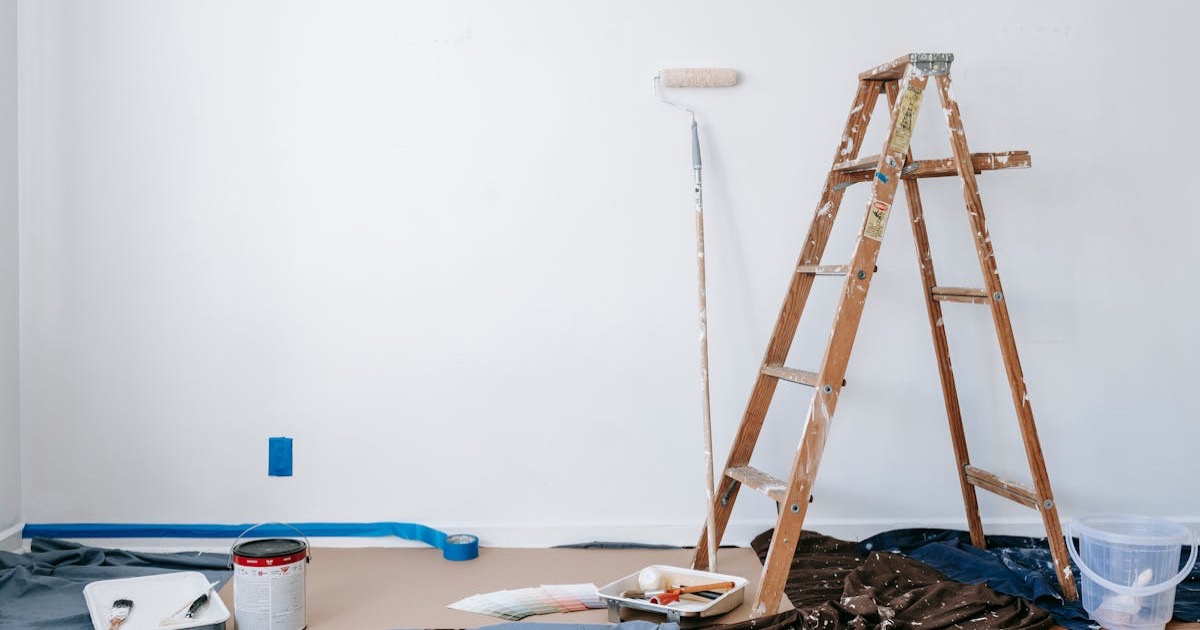
Paint is the single most cost-effective way to transform your home. A fresh coat can make a tired kitchen feel new, boost your curb appeal dramatically, and add measurable value to your property. But painting is also one of those projects where the gap between a good job and a bad job is enormous - and the difference almost always comes down to preparation, product selection, and technique.
This guide covers everything Okanagan homeowners need to know about painting their homes, inside and out. We'll get into the details that actually matter: which paint types work best for our climate, how to prep surfaces properly, what colors are trending and why that matters less than you think, realistic cost estimates, and honest advice on when to grab a roller yourself and when to call in a professional.
Understanding Paint Types and Finishes
Before you pick a color, you need to understand what you're actually buying. Not all paint is created equal, and the Okanagan's climate - hot, dry summers with intense UV and cold winters with freeze-thaw cycles - demands specific performance characteristics.
Interior Paint
Modern interior paints are virtually all water-based acrylic latex. Oil-based interior paints have largely disappeared from the residential market due to VOC regulations and the fact that latex technology has caught up in quality.
Here's what the sheen levels actually mean for your home:
Flat/Matte - Hides imperfections beautifully but marks easily and is harder to clean. Best for: ceilings, low-traffic bedrooms, formal dining rooms. Avoid in: kitchens, bathrooms, hallways, kids' rooms.
Eggshell - The most popular finish for a reason. Slight sheen that's easy to clean without highlighting every wall imperfection. Best for: living rooms, bedrooms, dining rooms. This is your default choice for most rooms.
Satin - More sheen and more durability than eggshell. Wipes clean easily. Best for: kitchens, bathrooms, hallways, kids' rooms, trim. The workhorse finish.
Semi-Gloss - Highly durable and moisture-resistant. Shows imperfections more. Best for: trim, doors, cabinets, bathrooms with heavy moisture. Not great for large wall surfaces unless they're in excellent condition.
High-Gloss - Maximum durability and cleanability. Shows every flaw. Best for: accent pieces, front doors, furniture. Rarely used on walls in residential settings.
The most common mistake homeowners make is using flat paint everywhere because it looks elegant in the store. Within six months, every fingerprint, scuff, and splash mark shows up and won't wipe off. Use eggshell or satin in any room where people actually live. Save flat for ceilings and guest rooms.
Exterior Paint
Exterior paint needs to handle UV radiation, temperature extremes, moisture, and in the Okanagan, everything from 40-degree summer heat to -20 degree winter cold. That's a 60-degree swing that paint needs to expand and contract through without cracking.
100% Acrylic Latex is the standard for exterior work. It's flexible, breathable, resistant to UV fading, and cleans up with water. Look for products specifically rated for high UV exposure - the Okanagan sun is no joke, especially on south and west-facing walls.
Elastomeric coatings are worth considering for stucco homes. These ultra-thick coatings bridge hairline cracks and create a waterproof membrane. They cost more but can dramatically extend the life of stucco exteriors.
Solid stains are an alternative to paint for wood siding, decks, and fences. They penetrate the wood rather than sitting on top of it, so they don't peel. They do fade over time and need reapplication every 3 to 5 years, but maintenance is much simpler than paint.
Paint Quality: What You're Actually Paying For
The price difference between economy and premium paint is typically $20 to $40 per gallon. Here's what that extra money buys you:
- Higher pigment concentration - Better coverage in fewer coats. Premium paint often covers in one coat where economy paint needs two or three.
- Better resins - More durable, more flexible, better adhesion. The paint stays looking good longer.
- UV stabilizers - Critical in the Okanagan. Cheap exterior paint can start fading noticeably within 2 to 3 years.
- More solids content - The paint film is thicker and tougher after it dries.
In almost every case, buying premium paint saves money overall because you use fewer gallons, apply fewer coats, and repaint less frequently. One coat of premium at $65 per gallon costs less than two coats of economy at $35 per gallon - and lasts years longer.
Painting & Touch-Ups
Starting at $375/visit - included in your plan
Interior Painting: Room-by-Room Guide
Preparation is Everything
Professional painters spend 60 to 80 percent of their time on prep work. This is the part that separates a paint job that looks good for 10 years from one that starts peeling in 10 months.
Surface cleaning. Walls accumulate dust, grease, and grime even in clean homes. Wipe all surfaces with a damp cloth or TSP solution. Kitchen walls near the stove and bathroom walls near the shower need extra attention.
Repair. Fill nail holes and small cracks with lightweight spackle. For cracks wider than a hairline, use mesh drywall tape and joint compound. Sand everything smooth after drying. If you can feel the patch with your fingers, you'll see it under paint.
Priming. New drywall, patched areas, stains, and dramatic color changes all need primer. Tinted primer is essential when going from dark to light colors - without it, you might need 4 or more coats of finish paint to get even coverage.
Taping and masking. Use painter's tape on trim, ceiling edges, and anywhere paint colors change. Press the edge firmly to prevent bleed-through. Remove tape while the final coat is still slightly tacky for the cleanest lines.
Drop cloths. Canvas drop cloths stay in place and absorb drips. Plastic sheeting is slippery and drips roll off onto your floors. Canvas costs more but performs immeasurably better.
Cost Estimates by Room
These are realistic professional painting costs for the Okanagan market in 2026, including labor and materials for walls only (trim is additional):
| Room | Average Size | Cost Range |
|---|---|---|
| Bedroom (standard) | 12x12 ft | $350 - $500 |
| Primary bedroom | 14x16 ft | $450 - $700 |
| Bathroom | 8x10 ft | $250 - $400 |
| Kitchen | 12x14 ft | $400 - $650 |
| Living room | 16x20 ft | $500 - $800 |
| Hallway | varies | $200 - $400 |
| Ceiling (per room) | varies | $150 - $350 |
| Trim (per room) | varies | $100 - $250 |
Factors that push costs higher: high ceilings (over 9 feet), heavy prep work needed, multiple colors, accent walls, textured finishes, and difficult access.
Color Selection: What Actually Matters
Color trends come and go. What looked fresh in 2020 already feels dated in 2026. Instead of chasing trends, focus on these principles:
Undertones matter more than the color itself. Every white has an undertone - warm (yellow, pink) or cool (blue, green, gray). The undertone determines whether a color feels cozy or clinical, and whether it clashes with your fixed elements like flooring, countertops, and cabinetry. Always test undertones against your existing finishes.
Natural light changes everything. The same color looks completely different in a north-facing room versus a south-facing room. Okanagan homes get intense, warm light through south and west windows. Colors will appear warmer and more saturated than they look on a paint chip. Always test with large samples on the actual walls.
The 60-30-10 rule works. 60% of the room in your dominant color (usually walls), 30% in a secondary color (furniture, curtains), and 10% in an accent color (pillows, art, accessories). This creates balance without being boring.
Resale considerations. If you're planning to sell within 3 to 5 years, stick with warm neutrals. They photograph well, appeal to the broadest range of buyers, and let your home's features speak for themselves. Bold colors are for homes you plan to live in.
That said, the colors gaining traction in 2026 include warm whites with slight green or clay undertones, deep earthy greens for accent walls and cabinetry, warm terracotta and ochre tones, and soft sage greens. The era of stark cool grays is fading in favor of warmer, more organic palettes.
Never choose a paint color from a small chip under store lighting. Buy sample pots and paint large swatches (at least 2 feet by 2 feet) on your actual walls. Look at them at different times of day. Live with them for 48 hours before committing. The $20 you spend on samples can save you from a $500 mistake.
Painting & Touch-Ups
Starting at $375/visit - included in your plan
Exterior Painting in the Okanagan
When to Paint
Timing is critical for exterior painting in the Okanagan. The ideal conditions are:
- Temperature: Between 10 and 30 degrees Celsius. Below 10, paint doesn't cure properly. Above 30, it dries too fast and won't level.
- Humidity: Between 40% and 70%. Too dry and paint dries before it bonds. Too humid and it won't dry at all.
- No rain: Need at least 24 hours of dry weather after application.
- No direct sun: Paint applied in direct hot sun dries too quickly, causing brush marks, lap marks, and poor adhesion.
The practical window in the Okanagan is mid-May through mid-September. The sweet spot is late May through June and September through early October - warm enough for proper curing but without the extreme heat of July and August.
If painting in summer, work on the shaded sides of the house. Start on the north and east walls in the morning, move to the south and west walls in the late afternoon when they're in shade. Never paint a surface that's hot to the touch.
Exterior Prep Work
Exterior prep is even more critical than interior prep because you're fighting weather, UV, and moisture.
Power washing. Clean all surfaces 2 to 3 days before painting. A power washer at 1,500 to 2,000 PSI removes dirt, mildew, chalking paint, and loose material. Let surfaces dry completely - this is why you do it days in advance.
Scraping and sanding. All loose, peeling, or flaking paint must come off. Feather the edges of remaining paint smooth so the new coat doesn't have visible transitions. For lead paint concerns on homes built before 1978, hire a certified abatement professional.
Caulking. Inspect and replace caulk around every window, door, corner board, and joint. Use paintable exterior caulk rated for your climate. This is where water gets in and where paint fails first.
Priming. Bare wood, stain bleed-through, and areas with mildew staining all need primer. Use a high-quality exterior primer specifically designed for your siding material.
Masking. Protect windows, doors, light fixtures, house numbers, and landscaping. Exterior masking takes time but prevents costly cleanup and damage.
How Often to Repaint
Repaint frequency depends on your siding material and sun exposure:
| Siding Type | Repaint Interval | Notes |
|---|---|---|
| Wood (painted) | 5 - 7 years | South-facing walls may need attention at 4 - 5 years |
| Wood (stained) | 3 - 5 years | Easier maintenance, no peeling |
| Stucco | 7 - 10 years | Elastomeric coatings extend this to 10 - 15 |
| Fiber cement (Hardie) | 10 - 15 years | Factory finish lasts longer than field-applied |
| Vinyl | Rarely | Can be painted if desired, lasts 7 - 10 years |
| Brick | 15 - 20 years | If painted; natural brick doesn't need paint |
Exterior Painting Costs
Full exterior repainting for an average Okanagan home (1,800 to 2,400 sq ft) typically costs:
- Single-story: $4,000 - $7,000
- Two-story: $6,000 - $10,000
- Trim only: $1,500 - $3,000
- Deck staining: $800 - $2,500 depending on size
These costs include labor, materials, prep work, and cleanup. Prices increase for homes with complex architecture, extensive wood trim, or siding in poor condition requiring heavy prep.
Painting & Touch-Ups
Starting at $375/visit - included in your plan
DIY vs. Professional Painting: An Honest Assessment
When DIY Makes Sense
- Single room, simple layout. A rectangular bedroom with 8-foot ceilings, no crown molding, and walls in good condition. This is the ideal DIY project.
- Touch-ups and maintenance. Small scuff marks, single-wall refreshes, and accent walls are manageable for most homeowners.
- You enjoy it. Some people find painting meditative. If that's you, embrace it.
- Budget is extremely tight. The labor savings on a single room can be $200 to $400.
When to Hire a Professional
- Multi-room projects. Painting an entire floor or whole house is 10 to 20 times more work than people estimate. Professional crews work in coordinated teams and finish in days what takes a homeowner weeks of evenings and weekends.
- Exterior work. Ladders, scaffolding, weather timing, and the physical demands of overhead work make this genuinely dangerous for non-professionals. Falls from ladders are one of the most common home improvement injuries.
- High ceilings and stairwells. Anything over 9 feet tall requires extension ladders, scaffolding, or specialty equipment. Vaulted ceilings and two-story foyers are professional territory.
- Cabinets. Cabinet painting requires spray equipment, meticulous prep, and multiple thin coats. Brush-and-roller cabinet painting almost always shows brush marks and wears poorly.
- You value your time. A professional crew of three can paint the interior of a 2,000 sq ft home in 3 to 4 days. A homeowner doing the same job on evenings and weekends is looking at 3 to 6 weeks. Calculate your hourly rate and the math usually favors hiring a pro.
The Hidden Costs of DIY Painting
When calculating whether to DIY, most people forget:
- Equipment: Rollers, brushes, trays, tape, drop cloths, sanding supplies, caulk, primer, ladders, extension poles. For a proper job, you're spending $100 to $250 on supplies before buying paint.
- Mistakes: A gallon of paint to fix a problem area. Cleaning paint off flooring or trim. Repainting because the first attempt had visible roller marks.
- Time: A standard bedroom takes 6 to 10 hours for a first-time DIY painter, including prep, painting, and cleanup. A professional does it in 3 to 4.
- Quality: Professionals deliver consistent, smooth coverage with crisp lines. That quality difference is visible every single day.
If you decide to DIY, invest in the best brushes and rollers you can find. A $25 Purdy brush and a high-density roller cover produce dramatically better results than cheap tools. The brush alone accounts for about 40% of the finish quality on trim work.
Making Painting Part of Your Home Maintenance Plan
Most homeowners think about painting when something looks bad enough to bother them. By that point, the paint has often failed as a protective coating, letting moisture, UV, and weather damage the underlying surface. Repainting then becomes more expensive because of the extra prep needed.
A smarter approach is treating painting as scheduled maintenance:
- Annual touch-up visit. Walk through your home once a year and address scuffs, chips, and worn areas before they spread. A 2 to 3 hour annual painting visit keeps your home looking fresh and prevents deterioration.
- Exterior inspection every spring. Check all painted surfaces for cracking, peeling, chalking, or fading. Address problems on individual walls rather than waiting until the whole house needs repainting.
- Plan ahead for full repaints. If you know your exterior was last painted in 2021, start budgeting and planning for a repaint in 2027 or 2028. Getting quotes early gives you leverage and options.
My Home Plan includes painting as a core service at $350 per annual visit, available in our Minimum plan ($89/month with 4 services), Fundamentals plan ($159/month with 9 services), and Premium plan ($249/month with all 14 services). That annual visit covers interior touch-ups, minor exterior spot work, and color consultations - keeping your home maintained year-round rather than lurching from crisis to crisis.
Ready to simplify your home maintenance?
Get all your home services in one monthly plan. Vetted contractors, guaranteed scheduling, predictable pricing.
Final Thoughts
Painting your home is not just cosmetic. A good paint job protects your walls from moisture, your siding from weather, your wood from rot, and your investment from depreciation. It's maintenance that happens to look beautiful.
Whether you're touching up a bedroom, refreshing your kitchen cabinets, or protecting your home's exterior from another Okanagan summer, the principles are the same: invest in quality materials, never skip prep work, and know when a project is beyond your skills and tools.
The best paint job is one that's maintained consistently, not one that's redone dramatically every decade. Small annual investments in painting keep your home looking sharp, protect your surfaces, and cost far less over time than the cycle of neglect and expensive full repaints.
Your home deserves paint that works as hard as it looks.
Frequently Asked Questions
Why Homeowners Choose My Home Plan
Predictable Pricing
One monthly payment covers everything. No surprise quotes or hidden fees.
Vetted Contractors
Every contractor is background-checked, insured, and reviewed.
Zero Hassle
We handle scheduling, quality control, and follow-ups. You relax.
Related Articles
25 Things a Handyman Can Fix in Your Home (And What Each One Costs)
Not sure what a handyman can actually do? Here are 25 of the most common repairs and tasks a professional handyman handles, organized by room, with real cost estimates and advice on when to DIY versus when to call in help.
Top 10 Common Household Pests in the Okanagan: Identification & Prevention Guide
From carpenter ants tunnelling through structural beams to wasps nesting under your eaves, the Okanagan Valley is home to a wide range of household pests. Learn how to identify, prevent, and deal with the top 10 most common pests in the region.
How to Get Rid of Ants in Your Home: The Complete Homeowner's Guide
Dealing with ants in your kitchen, bathroom, or walls? This comprehensive guide covers everything from identifying the species to sealing entry points, choosing the right bait, and knowing when it is time to call a professional.