Strata Maintenance Responsibilities in BC: What Your Council Must Know
Complete guide to strata maintenance responsibilities in BC. Learn what the Strata Property Act requires, common vs limited common property, and council duties.
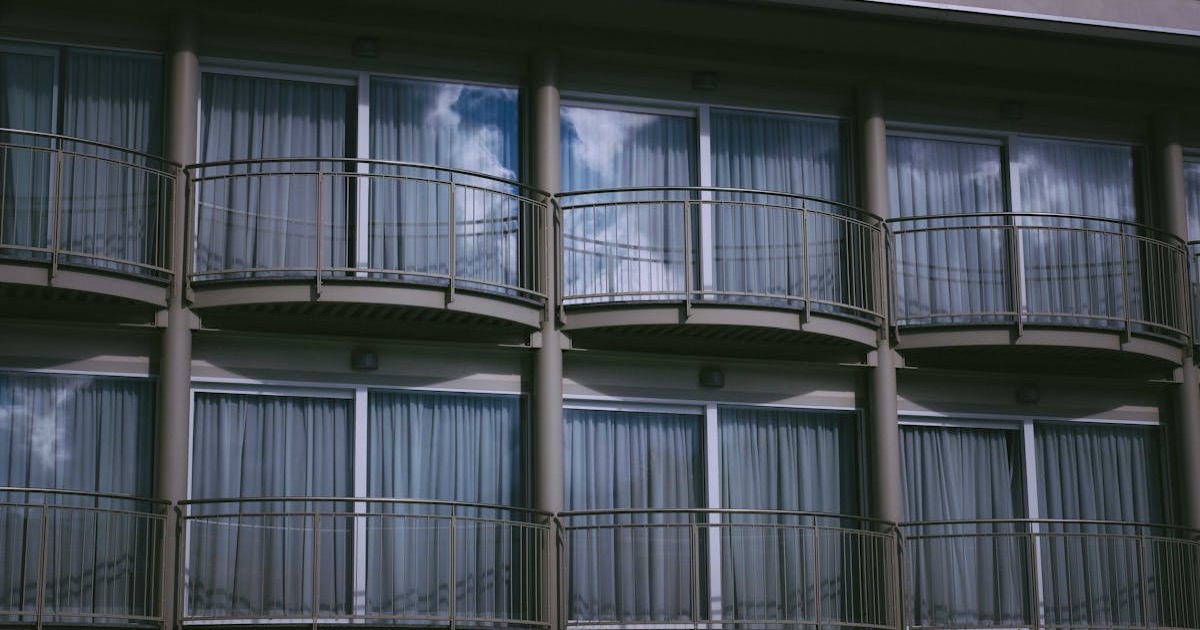
Running a strata corporation in British Columbia is not a casual volunteer gig. It is a legal responsibility with real consequences when things go wrong. And when it comes to building maintenance, the consequences of getting it wrong - or simply not doing it - can be devastating for the corporation, for individual council members, and for every owner in the building.
The BC Strata Property Act lays out clear expectations for how strata corporations must maintain their buildings and common areas. But in practice, many strata councils struggle to understand exactly what they are responsible for, how to prioritize maintenance tasks, and how to manage the contractors and budgets required to keep their buildings in good condition.
This guide walks through everything a strata council needs to know about maintenance responsibilities in BC.
The Legal Foundation: BC Strata Property Act
The Strata Property Act (SPA) is the governing legislation for all strata corporations in British Columbia. It establishes the fundamental maintenance obligations that every strata corporation must fulfill.
Section 72: The Core Obligation
Section 72 of the Strata Property Act states that a strata corporation must repair and maintain common property and common assets. This is not optional. It is a legal requirement.
The scope is broad. Common property includes everything that is not part of an individual strata lot - the building envelope, roof, hallways, stairwells, elevators, lobbies, parking structures, landscaping, drainage systems, and shared mechanical and electrical systems. Common assets include items like maintenance equipment, furniture in common areas, and recreational facilities owned by the corporation.
Strata Lot Boundaries
Understanding the strata corporation's maintenance obligations requires understanding where a strata lot ends and common property begins. In a typical strata building, the strata lot boundary is the midpoint of the walls, floors, and ceilings separating one unit from another or from common areas. Everything inside that boundary is the individual owner's responsibility. Everything outside it belongs to the strata corporation.
When a pipe inside a wall bursts, the question of who pays depends on whether that pipe serves only one unit or the building as a whole, and exactly where the damage occurred relative to the strata lot boundary.
The strata plan filed at the Land Title Office is the definitive document that defines strata lot boundaries and common property designations. Every council member should have access to and understand their building's strata plan.
Bylaws and Their Role
Individual strata corporations can adopt bylaws that modify or expand on maintenance responsibilities. For example, a corporation can adopt bylaws requiring owners to maintain limited common property designated for their exclusive use, such as balconies or patios.
The Standard Bylaws included in the SPA apply by default unless a strata corporation has filed its own custom bylaws with the Land Title Office.
Common Property vs. Limited Common Property
One of the most frequent sources of confusion and conflict in strata corporations is the distinction between common property and limited common property.
Common Property
Common property is owned collectively by all strata lot owners and maintained by the strata corporation. This includes the building envelope, roof systems, structural elements, shared mechanical systems (boilers, central HVAC, fire suppression, elevators), shared plumbing and electrical, common areas (hallways, stairwells, lobbies, parkade), and exterior grounds (landscaping, driveways, walkways, retaining walls).
The strata corporation is legally obligated to maintain all of this. Costs are shared among all owners through strata fees, proportional to their unit entitlement.
Limited Common Property (LCP)
Limited common property is common property that the strata corporation has designated for the exclusive use of one or more strata lot owners. Common examples include balconies, patios, parking stalls, storage lockers, and exclusive-use garden plots.
The critical question with LCP is who maintains it. Under the SPA, maintenance of limited common property defaults to the strata corporation unless the bylaws specifically assign that responsibility to the owner who has exclusive use.
If your strata corporation has not adopted specific bylaws addressing limited common property maintenance, the corporation is responsible for maintaining it - even though only one owner uses it. Review your bylaws and consider adopting LCP maintenance provisions if they are not already in place.
Building a Comprehensive Maintenance Plan
A maintenance plan is not just good practice - it is an essential governance tool that protects the building, the owners, and the council members themselves.
Depreciation Reports
Since 2012, the Strata Property Act has required most strata corporations to obtain depreciation reports every three years. These reports, prepared by qualified professionals, inventory all common property and common assets, assess their current condition, estimate remaining useful life, and project repair and replacement costs over a 30-year planning horizon.
Depreciation reports serve as the foundation of a strata corporation's long-term maintenance plan. Corporations that fail to obtain them must inform owners annually and include a statement on Form B Information Certificates when units are sold.
The Three Tiers of Maintenance
An effective strata maintenance plan operates on three tiers:
Tier 1: Routine Maintenance - Day-to-day and seasonal tasks like cleaning common areas, landscaping, snow removal, gutter cleaning, and HVAC filter changes. These are predictable and budgeted in the operating fund.
Tier 2: Preventive Maintenance - Scheduled inspections and servicing designed to extend the life of building components. This includes roof inspections, boiler servicing, window seal inspections, and drainage system flushing. These tasks are typically annual or semi-annual.
Tier 3: Capital Maintenance - Major repairs and replacements identified in the depreciation report, such as roof replacement, elevator modernization, and building envelope remediation. These are funded from the contingency reserve fund.
Strata Maintenance Made Simple
One platform for all your building maintenance needs. Volume pricing, vetted contractors, zero hassle.
The Contingency Reserve Fund
The contingency reserve fund (CRF) is the strata corporation's savings account for major repairs. Under the SPA, strata corporations must contribute annually. The minimum contribution is the greater of 10 percent of the operating budget or the amount recommended by the most recent depreciation report.
When a major repair is needed and the CRF is underfunded, the corporation faces painful options: a special levy (a one-time assessment that creates financial hardship for owners), a bank loan (requiring a three-quarter vote and adding interest costs), or deferring the work (allowing damage to compound and exposing the council to liability).
A properly funded CRF, guided by an up-to-date depreciation report, allows the corporation to handle major maintenance without financial shock to owners.
Liability and Risk Management
Council Member Liability
Under Section 31 of the SPA, council members are not personally liable for actions taken in good faith while carrying out their duties. However, this protection has limits. Council members who act negligently or fail to fulfill statutory duties can be held personally liable.
The most common liability risk in maintenance is deferral. If the council knows about a safety hazard or deteriorating condition and fails to address it, and that failure results in damage or injury, both the corporation and individual council members could face legal claims.
Insurance Considerations
Every strata corporation must carry property insurance covering the building and common property at replacement value. Most also carry directors and officers (D&O) liability insurance to protect council members.
Adequate insurance is not a substitute for proper maintenance. Repeated claims from maintenance neglect will drive up premiums, and insurers can deny claims resulting from failure to maintain.
BC strata insurance premiums have increased dramatically in recent years. One of the most effective ways to control insurance costs is demonstrating proactive maintenance practices. Insurers view well-maintained buildings as lower risk, which translates to more favorable premiums and deductibles.
Managing Contractors and the Bidding Process
For most strata corporations, maintenance work is performed by external contractors rather than in-house staff. This makes contractor management one of the most time-consuming responsibilities for strata councils - and one where mistakes are costly.
A well-run bidding process includes defining the scope of work clearly so that all bids are comparable, soliciting at least three bids from qualified providers, evaluating beyond price to include experience with strata properties, insurance coverage, references from similar buildings, proposed timelines, and warranty terms. Councils should verify that contractors hold appropriate BC licenses, carry adequate liability insurance (minimum $2 million for most building maintenance work), and are in good standing with WorkSafeBC. Finally, document the selection rationale in council meeting minutes to demonstrate good governance and protect the council if the decision is later questioned by owners.
The Single-Provider Advantage
While competitive bidding is important for major projects, managing dozens of separate contractors for routine maintenance creates its own problems. Each contractor needs vetting, scheduling, supervision, invoicing, and evaluation. For volunteer councils, this administrative burden is overwhelming.
A consolidated maintenance provider delivers significant value by offering one point of contact for all maintenance needs, consistent quality standards across service categories, volume pricing that reduces per-service costs as building size increases, simplified administration with consolidated billing, and single-point accountability where one provider owns the entire relationship.
Annual Maintenance Calendar for the Okanagan
Effective strata maintenance follows a seasonal rhythm:
Spring (March - May): Post-winter building envelope inspection, roof inspection and gutter cleaning, landscaping spring cleanup and irrigation startup, exterior drainage inspection, parkade inspection after freeze-thaw cycles.
Summer (June - August): Exterior painting and caulking, concrete and asphalt repairs, major capital projects, fire safety system annual inspection, exterior pressure washing.
Fall (September - November): Gutter cleaning after leaf fall, irrigation winterization, boiler and heating system servicing, snow removal contractor confirmation, building envelope winter preparation.
Winter (December - February): Snow and ice management, heating system monitoring, interior common area maintenance, annual general meeting preparation, budget and strata fee planning.
Owner Communication and Transparency
One of the most underrated aspects of strata maintenance is how the council communicates with owners about it. Maintenance decisions - particularly those that affect strata fees - are among the most contentious topics at annual general meetings. Councils that communicate proactively build trust and make budget approval significantly smoother.
Best practices include providing owners with annual maintenance reports that summarize completed work, costs, and upcoming needs. Share the depreciation report findings openly and explain how CRF contributions relate to projected capital projects. When maintenance causes disruption (noise, access restrictions, parking impacts), provide advance notice with specific dates and timeframes. After major projects, share completion reports with photos and final costs compared to budget.
Transparency does not mean burdening owners with every operational detail. It means giving them enough information to understand that the council is making informed, responsible decisions about their building and their money.
Common Mistakes to Avoid
Deferring maintenance to keep fees low. This is the single most common and damaging mistake. The building deteriorates, repair costs escalate, and eventually the corporation faces a massive special levy costing far more than incremental fee increases would have.
Failing to document maintenance activities. Every maintenance activity should be documented - what was done, when, by whom, and at what cost. This demonstrates compliance with the SPA and supports insurance claims.
Not having written contracts. Verbal agreements with contractors are a recipe for disputes. Every engagement should specify scope, timeline, cost, insurance requirements, and warranty terms.
Ignoring small problems. A minor roof leak today becomes a major envelope remediation project in two years. Small problems in building maintenance compound. Address issues promptly.
Strata Maintenance Made Simple
One platform for all your building maintenance needs. Volume pricing, vetted contractors, zero hassle.
Key Takeaways
- The BC Strata Property Act (Section 72) legally requires strata corporations to repair and maintain all common property and common assets
- Common property, limited common property, and strata lots each carry different maintenance responsibilities - know where the boundaries are in your building
- Depreciation reports are required every three years and serve as the foundation for long-term maintenance planning
- The contingency reserve fund must be adequately funded to avoid special levies and deferred maintenance
- Council members can face personal liability for maintenance negligence - proper governance and documentation are essential protections
- A consolidated maintenance provider simplifies contractor management, reduces costs through volume pricing, and delivers consistent quality across all service categories
Frequently Asked Questions
Why Homeowners Choose My Home Plan
Predictable Pricing
One monthly payment covers everything. No surprise quotes or hidden fees.
Vetted Contractors
Every contractor is background-checked, insured, and reviewed.
Zero Hassle
We handle scheduling, quality control, and follow-ups. You relax.
Related Articles

Choosing a Maintenance Provider for Your Strata: The Complete Evaluation Checklist
Choosing the wrong maintenance provider costs strata corporations more than just money - it costs time, trust, and building condition. This checklist covers every factor a strata council should evaluate before signing a maintenance contract, from insurance and references to SLAs and transition planning.
How Property Managers Can Streamline Maintenance Across Multiple Properties
Managing maintenance across a portfolio of properties is one of the biggest operational challenges in property management. This guide covers centralized vs decentralized maintenance models, vendor consolidation strategies, and how to reduce costs without sacrificing quality.

Strata Maintenance Budget Planning: A Practical Guide for Councils
A strata maintenance budget that is too lean leads to deferred maintenance and special levies. One that is bloated wastes owners' money. This guide walks strata councils through the practical steps of building a maintenance budget that protects the building without overspending.